Welcome to the Hire Power Radio Show, where entrepreneurs and business leaders learn to hire with confidence and precision. Hosted by Rick Girard, this show is your go-to resource for avoiding costly hiring mistakes and securing the right talent to drive your company’s success. We dive deep into hiring challenges each week, featuring candid conversations with top-performing rebel entrepreneurs, disruptors, and industry experts. Join us every Tuesday at noon (PT) on LinkedIn Live for actionable insights, proven strategies, and the latest trends to give you the hiring edge. Subscribe now and join the movement to transform your hiring game. Do you have thoughts or questions? We’d love to hear from you!
Episodes
Thursday Feb 18, 2021
Thursday Feb 18, 2021
No one is interested in working for your ego. Just ask our friend …. Dick (name changed to protect the innocent).
Dick is a VP of a small, well funded start-up and very proud of what they are building. So proud that he has established a very high bar for the people he wants to hire. Let’s just say his expectations are a bit out of whack! He has Ferrari expectations on a Hyundai budget.
The way in which the interview is conducted comes across as adversarial. Dick comes across as a real, well you know…. Horses ass. As a result, some fantastic people have opted not to accept his offer and negative Glassdoor reviews are abundant.
Today is about how to NOT run off talented people in your interview, just like Dick.
Our guest today: Molly McGrath, Founder of Hiring & Empowering Solutions
Molly is a National Podcaster, decade long national blogger and 2 x Amazon #1 Best Selling Author. She has coached, consulted and directed presidents and founders of national organizations and over 4,000 small business owners in; executive-level leadership, continuous improvement and team empowerment initiatives to infiltrate new markets, leveraging partner ecosystems and producing profitability.
Today we discuss:
- How you come across as Dick
- How to fix the problem even if you are a Dick
Full disclosure: My dad’s name is Dick…. Sorry dad!
Challenge today?
- Entrepreneurs don't believe that is a employee market
- People are looking for an opportunity
- People need leadership
- No one needs a job for a paycheck
- Realize that you are not the prize
- Recruiting is 100% sales
- You can't hide the fact that you are an asshole
- You are responsible for the energy that you leave in every room
- The interview is reckless
- You have to be
Why is this important to the company?
- Mis-hires
- Brand Reputation Management
- Ability to hire
- Social Media, Glass door Reviews
- Greatly reduce your ability to hire
Rick’s Nuggets
- Own who you are
- No matter how great your company is, it is not the prize
- Means to an end & a Paycheck
- Two words: Improper screening
How do we solve the problem?
- Audit on current interviewing, onboarding, & training process
- Make it safe
- Name it and own it
- Be clear on who you are, prepare people for the interview
- Treat your interview like a client
- Brand reputation management
- End process gracefully
- Leave them better than when they entered
- Close the loop
- Feedback
- Honest & intentional feedback
- Be a coach, leader, mentor
Rick’s Nuggets
- Preparation for everyone in the interview process.
Key Takeaways:
- FINDING ROCKSTAR/Batteries Included EMPLOYEES-- hiring and recruiting is 100% sales. You are selling YOUR COMPANY. don't make the entry point harder than hacking the white house--- keep your ADS short/empowering- don't include salary….you might push away a superstar b/c your top pay is dollars short of what they are worth. You want to take EVERYONE….interview for mindset/emotional intelligence/core values and don't get seduced by the resume. You can always training knowledge & Skillset BUT the Human stuff is what destroys a team.
- KEEPING ROCKSTAR EMPLOYEES---Once you have a rockstar team-- don't get too cocky and think you're safe. Implement a quarterly “Employee Growth Plan'' for very employee in your business. This is the KEY to keeping and creating lifetime employees. Please feel free to email me and I will give you my process for free, as a listener of Rick’s. Nothing makes me HAPPIER as a recruiter when In box an employee and say “hey, are you happy & being treated well @ your current job or are you interested in hearing about a great opportunity…..” and then i get a response “I am VERY happy where I am, not interested!” i will immediately go check out the company they are working for and can IMMEDIATELY see the culture/values/ of that company and get so hopeful there are amazing companies finally understanding the value of team empowerment!
- PERSONAL GROWTH is MORE Important than Professional growth-- when you invest in your team and invest (pay for!!!) coaching programs, mindset programs and have them CONSISTENTLY enrolled & engaged in coaching and personal development & growth your employees wont leave! (I will elaborate on ALL of this more during the LIVE.)
Links:
LinkedIn: https://www.linkedin.com/in/molly-hall/
Websites: www.hiringandempowering.com
Twitter:https://twitter.com/HireAndEmpower
This show is proudly sponsored by Criteria Crop: https://www.criteriacorp.com/
Friday Feb 12, 2021
Friday Feb 12, 2021
Think what you may about the military but the truth is they hire better than you!
They developed and refined a process that, over time, has ultimately uncovered those individuals who exemplify the core values that are critical to the success of the organization and the mission.
A strong commitment to We, before Me! …which is what your company needs
Today is about lessons learned from Special Forces that you can apply to your company, to ensure that you are hiring the people who also share your company's core values.
Our guests today: Michael Sarraille, Founder & CEO of EF Overwatch, & George Randle, managing partner at EF Overwatch & Head of Global Talent Acquisition of Forcepoint.
Mike Sarraille is a former Recon Marine and retired US Navy SEAL officer with twenty years of experience in Special Operations, including the elite Joint Special Operations Command.
George Randle is a former US Army officer, and Vice President of Global Talent Acquisition at Forcepoint, a human-centric cybersecurity company. George has more than two decades of experience in talent acquisition at Fortune 100 and Fortune 1000 firms.
Today we discuss:
- Why it is critical for values to align with the mission
- How to Model Military Special Forces in Hiring Talent
Can we all agree almost every core business problem can be traced back to a people problems?
Knowing this, why do we set ourselves up for failure by hiring the wrong people?
Challenge today?
- Companies are terrible at hiring
- Not the best leading recruiting
- Actions don't reflect people importance
- Wrong people leading people
Why is this important to the company?
- If you don't achieve strategic competitive advantage over people, you will fail
- Weak HR function- CEO’s need to empower HR to breed success
- Every business function starts with people
- Costs are 213-1500% for a senior executive bad hire
- Direct cost- 2-15x the person's salary ($3400 per every 10k in salary)
- Indirect cost- disengaged employees
- Run out your A-players
Rick’s Nuggets
- Disengaged employees are easier to pluck out of your company when leadership is compromised
How do we deploy into your company?
- Focus in talent management solutions
- Talent diagnostics
- Leading in talent management first
- Starts at the top
- Investing into your people
- Constant Training (less than 1% of companies do this)
Key Takeaways:
- Look in the mirror
- Treating your human capital as discipline, rigor & focus as you do on your financial?
Links:
LinkedIn:
https://www.linkedin.com/in/michaelsarraillemba/
https://www.linkedin.com/in/georgelrandle/
Websites:
Facebook:
https://www.facebook.com/efoverwatch/
https://www.facebook.com/talentwargroup/
Twitter:
https://twitter.com/MJSarraille
https://twitter.com/EfOverwatch
https://twitter.com/talentwargroup
Instagram:
https://www.instagram.com/efoverwatch/
https://www.instagram.com/talentwargroup/
This show is proudly sponsored by Criteria Crop: https://www.criteriacorp.com/
Thursday Feb 04, 2021
Thursday Feb 04, 2021
The remote interview is still a HUGE challenge for a lot of companies. Especially for those of you who are lacking a formalized process.
Simply evaluating skills and heavily relying on “vibe” to influence decisions is producing even worse results in this work from home environment.
Too much is able to remain hidden because video is limiting on the non-verbal cues that happen in the interaction.
Assumptions, bias and misinformation have become the new plague in today’s interview.
Today is about nailing your video interviews to ensure the strongest hire!
Our guest today: Brenna Loury, Head of Marketing for Doist.
Brenna Loury knows that the road to success isn’t a path you find — it’s a trail you blaze.
Fueled by her unorthodox marketing efforts, Brenna left her PR firm and joined Doist full-time in 2014. She handles everything from overall marketing strategy, to HR duties, to writing website copy. She’s helped expand Doist’s remote-first team from 5 to 92 employees in over 30 countries, and her grassroots marketing strategies have helped bring the company over 25 million users globally.…And everyone is remote!
Today we discuss:
- Why the Video Interview is so challenging today
- How to master the video interview
Challenge today?
- Not meeting in person
- Touch points have gone away
- Video interviews - change in format
- Onboarding
- Hire based on core values
Why is this important to the company?
- 98% employee retention rate
- Benefited the business
- People are happy and the quality of work
- Willingness to go above and beyond
Rick’s Nuggets
- Limited view of subject
- Uncomfortable/unnatural interaction
- Breeding ground for assumptions & unconscious bias
How do we build into your company?
- Same interview process across the company
- Structure
- Hiring committee (3 people)
- 1 hour interview
- Add insight question for people who submit a resume
Cultural Interview - team manager
- What are the challenges that Doist’s products are trying to solve that most excite you? (did they do their homework?)
- How might you improve our landing pages/XYZ? (can they be radically candid?)
- Tell me about a time in your personal life or at work when you had to be very detail oriented.
- Tell me about a time when you completed a project 100% on your own. How did you get started and what was the outcome? (can they work autonomously?)
- What’s the last good book that you read? (interests/life outside of work)
- Favorite apps on your phone? (interests/life outside of work)
Technical- person assigned (senior people)
- Judging the skills
- Can you tell me about a company that you think does a great job at product marketing?
- What are the advantages/disadvantages of using CSS preprocessors?
Test Project
- Pay people to do the work
- Examples:
- Create a week-long social media plan
- Write a blog post about a product update
- Create a Hacker News style reader
Cultural Final - leader/executive
- Covers 5 core values: Mastery, Independence, Communication, Ambition & Balance, Impact
- Behavioral questions:
- What’s the difference between someone who’s good in your field versus someone who’s outstanding?
- Tell me about a time when you disagreed with a team member. How did you approach that situation?
- Tell me about a time that you went above and beyond what was expected? What motivated you to do so?
- Behavioral questions:
Rick’s Nuggets
- Phone Screen / Discovery Call
- Pain, Desire, Impact
Key Takeaways:
- Prioritize hiring for cultural fit – some technical skills can be learned later on the job
- Do everything you can to cultivate an environment that values trust over tracking
Links:
Website: https://doist.com/
Blog: https://blog.doist.com/
Twitter: https://twitter.com/doist, https://twitter.com/brennakL
Relevant blog posts:
This show is proudly sponsored by Criteria Crop: https://www.criteriacorp.com/
Thursday Jan 28, 2021
Thursday Jan 28, 2021
High performance teams don't just happen by chance. They are artfully built with an impenetrable culture at its heart.
The people who join are in alignment with the values and purpose of the organization. The result is unrivaled performance above and beyond your expectations.
Our guest today: Greg Besner, Founder and Vice Chairman of CultureIQ
A global company that helps organizations create high-performance cultures. He and his firm have assisted more than one thousand organizations and millions of employees strengthen their company culture.
Greg was an early investor in Zappos which inspired his commitment to organizational culture. In 2018, he was ranked in USA Today as the 8th best CEO in the United States among a pool of 50,000 companies. He was also named the EY Entrepreneur Of The Year®.
Today we discuss:
- Why, if you are serious about your business, you need to prioritize your company values as the heart of your hiring decisions
- How to deploy a process to enable your company to hire people who continually raise the bar for performance
I find that often the phrase “not a good cultural fit” is an easy cop out line for a company to pass on people. When asked “HOW” the conversation quickly disintegrates.
How can someone not really make that conclusion when they lack clarity on what their culture/purpose is?
Challenge today?
- Recruiting for purpose/ culture alignment
- Zoom interview
- Body language/ energy
- Human interaction
- Interact in the environment around them
- Fumbling with this new interview process
- Onboarding
- Energy of the office not really happening
- Interpersonal mingling
- Because the human interaction is missing
- Elevates chance of bias
- People are uncomfortable in a video interview setting
Why is this important to the company?
- Culture alignment
- Diversity of experience, perspective
- Recruiting process is opposite of what it is today
- Expensive to recruit & train
- Turnover is expensive
- Employees who are not aligned with the purpose are expensive
Rick’s Nuggets
- Bias is a two way street
How do we build into your company?
- First interaction is a 2 sided conversation- human interaction
- Experience of working in the organization
- Company go first
- Let the person give their elevator pitch
- What would allow them to be successful at the company
- Having a framework
- Notes should be taken, structured, & details on their values
- Mutual agreement on moving forward
- Letting the person know the next steps
- Transparency
- Closure
- Interviews
- Teammate or HR first
- Try not to replicate the interview!
- Multi-step process
- Split up to cover different roles
- values from skills
- No need to cover the same questions
- hire bar raisers
Rick’s Nuggets
- First interaction: Discovery call
- Understand Pain, Desire, Impact
- Listen to understand first
- Buy in through connecting the dots
- Presenting back what fits, & what does not
Key Takeaways:
- Bar Raisers-
- Structured Interview Process
- Transparency in Hiring Process
Links
Email: greg@cultureiq.com
LinkedIn:https://www.linkedin.com/in/gregbesner/
Websites:
http://theculturequotient.com/
http://getsunflow.com/
Facebook: https://www.facebook.com/CultureIQ/
Twitter: https://twitter.com/cultureiq
YouTube: https://www.youtube.com/channel/UCSECYe1wg_KxMi_yNi7KQbA?view_as=subscriber
Instagram:https://www.instagram.com/cultureiq/
This show is proudly sponsored by Criteria Crop: https://www.criteriacorp.com/
Thursday Jan 14, 2021
Thursday Jan 14, 2021
There needs to be a deliberate cadence to your interview process.
Just like a first date, you wouldn't say “hi, I'm Rick. before we start the date, I’d like you to complete this sexual survey and if I like your answers, we can continue the date.”
Now it may work on some people. But the question you need to ask yourself is who exactly are you weeding out? Answer… A-Players!
Today we are talking about the pros and cons of screening mechanisms and the proper order to deploy them to keep people engaged.
Our guest today: Joel Patterson, Founder of The Vested Group
A business technology consulting firm in the Dallas, Texas area, and ForbesBooks author of The Big Commitment: Solving The Mysteries Of Your ERP Implementation. In 2011, Patterson founded The Vested Group, which focuses on bringing comprehensive cloud-based business management solutions to start-ups and well-established businesses alike.
Joel has hired hundreds of engineers & consultants and has learned a lot about what works in an interview process.
Today we discuss:
- Why a proper cadence is so critical in keeping top talent engaged
- How to set the correct sequence to avoid triggering “fight or flight” in top talent
Challenge today?
- Saving your time with a video screen first
- Wasting a lot of time with interviews of unqualified people
- Need to be efficient with people's time- billable resources
- Elevated the quality of the people hired
- Not as many bad hires
- Missing out on good talent?
- Do people want to jump through hoops?
Why is this important to the company?
- Cost to replace a person
- 100-150k loss per person lost
- Culture impact of people coming and going
- Sunday test- call on a sunday
Rick’s Nuggets
- Are you losing the top 20% in your screening efforts
- Transactional
- Value driven
How do we build into your company?
- Video - one way
- Phone screen
- Video Interview
- 2 sessions
- Job score card
- Core value
- Case Study to do
Rick’s Nuggets
- Discovery call (Positioning)
- PDI (Pain, Desire, Impact)
- Interview
- Culture, skills, culture, combo
- Behavioral questions
- Assessments/Assignments/Skills test
- Prefer working session to determine skills
- Connect the dots
Key Takeaways:
- Core values drive hiring/firing decisions
- Interviewers represent cross section of experience and skills levels (AMA)
- Providing purpose quickly is critical to long term hiring success
Guest Links
LinkedIn: https://www.linkedin.com/in/pattersonvested/
Website: http://www.thevested.com/netsuite-provider-the-vested-group
Facebook: https://www.facebook.com/VestedGroup/
Twitter: https://twitter.com/TheVestedGroup
YouTube: https://www.youtube.com/channel/UCHDBLjRuMtER5yUrPhZYKkw
This show is proudly sponsored by Criteria Crop: https://www.criteriacorp.com/

Thursday Jan 07, 2021
Thursday Jan 07, 2021
CEO campfire horror stories often start with “In the beginning, I hired a few friends of mine”... then the story digresses from there. Sometimes the situation works out but most of the time it is a disaster resulting in a severed relationship.
Today we are discussing lessons learned in hiring from your inner circle and how hiring for growth lands great talent.
Our guest today: Wing Lam, Owner of Wahoo’s Fish Tacos
Wing Lam is the eldest of the three founding brothers and the enigmatic character widely recognized as the face of the iconic Wahoo’s Fish Taco brand. A 30-plus-year restaurant industry veteran, he is often in the public eye participating as a panelist and speaker at global events such as the IEG Conference and guest lecturing for MBA programs at Yale, UCLA and USC.
Wing is Prolific & “rich in the currency of social good”!
Today we discuss:
- The pitfalls & benefits of hiring friends & family
- Two key components to hire successfully
Challenge in hiring friends & family?
- Setting precedence
- People did not take it seriously
- Stealing
- Can't allow people to take advantage of your generosity
- Corporate hires-
- Hired from headhunters for store managers (⅖ stayed over a year)
- Moved to growing from within
Why is this important to the company?
- Mistakes cost the company money, time & morale
Rick’s Nuggets
- Expectation Alignment
- Where we fail is in agreeing on expectations up front
How do we build into your company?
- Understand culture first
- Fit is more important than skills
- Up Hire
- Too much experience is good
- Opportunity to allow the person to do what they want to do
- Others intimidated by credentials
- Didn't feel like the person would take the job
- Personality, integrity, passion
- Translates to a good hire
Rick’s Nuggets
- Positioning determines the cultural fit
- Cultivating growth is what captures & retains talent
- People want to learn, grow and tackle new challenges
Key Takeaways:
- Referrals & dig deeper
- Really understand your culture & what fits
Links:
LinkedIn: Wing Lam
Website: Wahoo’s Fish Tacos
Organization: California Love Drop
This show is proudly sponsored by Criteria Corp
TAGS : #californialovedrop #wingdash #wahooswing #giving
Saturday Jan 02, 2021
Saturday Jan 02, 2021
“We really need to hire a person from xyz company and they need to be from a top tier school.” Words that make every recruiting professional cringe.
This criteria is the perfect storm for making the worst hire of your career. The Truth is, Your ego WANTS these things but the business needs a person with the RIGHT DNA to fuel company growth.
Our guest today: Greg Toroosian, Founder & Managing Director of Elevate Hire
Having worked for startups, globally recognized brands, and recruiting agencies, he brings a unique perspective, a fresh sense of understanding, and an elevated level of service to his clients.
He previously held the roles of Recruiting Manager for Virgin Hyperloop and Director of Talent Acquisition for Sweetgreen. Greg believes that recruiting and retaining talent is key to having a successful company.
Today we discuss:
- Setting expectations of what you can REALLY hire
- How to hire what you can Really hire
There are 2 ways to hire A-level talent
- Pay for them
- Be the solution to their career wounds
Challenge today?
- Overall value proposition
- Competitive market
- Hard to find or in demand roles
- Stage of growth
- Disconnect on what the market really is
- budget
- Clarity on what you are actually hiring for and why
- Coming back to earth on what is really needed
Why is this important to the company?
- Impact time to hire
- Help to hire the right people
- Think through their recruiting strategy
- Help with financial planning
How do we build into your company?
- Build your value proposition
- What is it to your employees
- Cultural element
- How to communicate you culture
- Honest and open about What your culture really is
- Allow people to opt in/opt out
- Business element
- What the work is
- Product/ service
- Social good, clean energy, industry
- Clear about how it is different from their competitors
- Personal/Professional element
- What’s in it for me?
- What will I learn?
- What will this do for my career?
- Clarity On what needs to be done
- What really needs to be done?
- First hire??? Now what?
- Clarity helps to target the right people, industries, competitors
- Gain clarity on what success looks like for this role
- Understanding the competitive market
- Clarity on what you are hiring for and why
- Common complexity of what is being built
- Reality check on what you NEED to be paying this person
- Who else you are in competition with for that person
- Solutions if the role cant flex
-
- If the person you need is unhirable?
- Competition, salary, location, level of skill, small pool
- Training & molding a person intro the role
- Contractor, fully remote,
Key Takeaways:
- Craft and solidify your EVP - at least for your company. Use the cultural, business, professional buckets to help.
- Be mindful of the market you’re hiring in and self aware of your company's positioning.
- If hiring the people you want or the way you want aren’t currently realistic, then consider creative ways of making your offering more attractive or creative ways of getting the work done.
Guest Links:
LinkedIn: Greg Toroosian
Website: Elevate Hire
Twitter: Toroosian
Email: greg@elevatehire.com
This show is proudly sponsored by Criteria Corp

Thursday Dec 24, 2020
Thursday Dec 24, 2020
Please, please, please wear pants during your video interview! Both parties, not just the person being interviewed.
Just yesterday, Jessie filled me in on the horror story of her last interview. The interviewer spilled his coffee, jumped up really quickly to reveal he was in his holiday boxers. While it makes for a hilarious story, it did not win the hire for the company...
Our guest today: Vince Thompson, Founder & CEO of MELT
One of America’s most successful sports marketing and branding agencies, and author of Build Brand You .
Vince has been named one of Atlanta Business Chronicle’s “Most Admired CEOs,” among the “500 Most Influential Atlantans” by Atlanta Magazine, the American Diabetes Association’s “Father of the Year,” one of Sports Business Journal’s “Power Players,” and was listed by BizBash as one of the top 1,000 people in the event industry.
Today we discuss:
- An impressive Pivoting story doing
- Building a virtual hiring process
Challenge today?
- Business collapsed overnight on March 16th
- Overnight NCAA canceled everything
- Nobody knew what was going to happen
- Had to furlough dozens of employees within weeks
- Breakdown in demographics
- Fear & unrest
- Pandemic, unrest, election …. Oh my
- Made the shift to 100% remote
- The liability gap is HUGE
- Mitigating the litigation dream
Silver linings
- Positive forward facing manner
- Reposition the company - opportunity to showcase what they are doing
- Career development
Why is this important to the company?
- Shifted /evolved the company into a multimedia & event company
- Overnight the market shifted to buyers market
- It will kill the “bounce” mentality
- Prepare for the next evolution
- Good will is good business!
How do we build into your company?
- Building a virtual hiring process
- Bring the heat (first impression)
- Wear something nice
- Know everything about the company, job & the person you are interviewing
- Get a good feeling for the chemistry before diving in
- Trust your gut
- Cease the opportunity to really have a more thorough vetting process
- Improve the process
- What did they do for themselves & others during Covid?
- What did you do to enhance yourself?
*during this time, if nothing was done for self or others…. Not something you want to hire
- Look at the big picture of “Who” the person really is
- A whole different set of ways in which you can
- Can't coach desire & attitude!
- Put something out that is positive, and
- No bad ideas to pitch in the marketplace
- Go from crazy to genius overnight
Key Takeaways:
- Pursue any crazy idea that might have been shelved
- Use a lot more discretion in hing as it is now a buyers market
- Shift in hiring for chemistry & culture to allow us to make more value based decisions
Guest Links:
LinkedIn: Vince Thompson
Website: MELT
Email: vince@meltatl.co
Twitter: vinnyinc
This show is proudly sponsored by Criteria Corp

Thursday Dec 17, 2020
Thursday Dec 17, 2020
Skills can be learned, but who a person is, is what determines a successful hire. This all comes down to core value alignment with the organization.
Shared values create a much tighter bond and a more engaged team member.
The correct answer is rarely hiring for skills. So consider alternative hiring initiatives like an apprenticeship program designed to purely foster career growth.
Our guest today: Nicholas Wyman, President of IWSI America
Nicholas is an international expert, particularly zero-ing in on CTE education, apprenticeship and training models in the US, UK, Germany, Switzerland and Australia. Wyman writes opinion pieces for Forbes, Quartz and Fortune, appearances on National Public Radio, he has notched top education writer on LinkedIn.
Today we discuss:
- Why an apprenticeship program might be the key to unprecedented company growth
- 6 step process to build a program at your company
Challenge today?
- Can't find people with the skills they need
- Employers need to do more to train people
- Design an apprenticeship program or internship model needs to be turned upside down
- Misconception that because a lot of
- Young people who have not been able to get a start
- Displaced people who need a fresh start
Why is this important to the company?
- Skills gap has gotten wider
- Economic uncertainty
- Global economic changes
- Impact of new govt coming in
- We will not be returning to normal
- Need to really look at your talent strategy
Rick’s Nuggets
- Apprenticeships for those in career transition- modern elders
How do we build an apprenticeship program into your company?
Six Step Plan:
1 - Identify the apprenticeable occupations
2 - Form a team to run the program
- Internal team- leadership support
- Identify coaches / mentors
3 - External partners
- Deliver Training has to be structured
- Training provider
- State funding assistance
4 - Define training goals & Wage schedules
5 - Marketing & Recruitment of the program
- Brand it & give identity
6 - Develop an ongoing evaluation process
Rick’s Nuggets
- Develop everything around your true corporate values
- Interview process that uncovers evidence to support the hire
Key Takeaways:
- Broadening your view on who you might employ - broader than diversity, disability - more women (women and youth disproportionately impacted by Covid)
- Get people engaged- lost generation of young people
- Take a long range view to skills development
- Rock solid, top down support- can not be just another training initiative
Guest Links:
LinkedIn: Nicholas Wyman
Website: IWSI America
Twitter: @nicholas_wyman
This show is proudly sponsored by Criteria Corp

Thursday Dec 10, 2020
Thursday Dec 10, 2020
Imagine having to staff 250 roles... just as many companies were laying off and scrambling to get their PPP loans approved.
Our guest today had 2 weeks to hire 250 people to handle the demand for PPP loans and is here to share his story.
Our guest today: Brock Blake, Co-Founder & CEO of Lendio
Brock spent the last nine years developing technology to get loans to more people, more quickly, and more efficiently than traditional lenders. Under his leadership, Lendio grew to be the largest online marketplace for small business loans in America. So when the coronavirus pandemic struck, he knew he was in a unique position to make a difference.
Today we discuss:
- Creative ways to bulk hire in a short period of time
- The hiring system to be able to crush a lot of hires in a very short time
Challenge today?
- We had committed to [a company] that we would hire 25+ of their people on a temporary basis to help with PPP and then they would return to their employment. It was a win/win. The painful part was realizing the people we hired through them were not skilled in computer software and systems. We ended up keeping only 8-9 people from [Company] which put us behind in getting resources to meet the demands we had.
- Being told “we are good, no more hires” next day “Let’s get 150 hired by next Monday” and we crushed those goals
Why is this important to the company?
- Getting to the bottom of the barrel in terms of Temp to hire resources for the last group that we hired. The incentive to stay home instead of work because of the unemployment benefits had kept a lot of people from applying for work. So those that were applying by the end of our hiring process were not the most employable people. The number of wage garnishments, failed background checks, etc. was much higher for this last group than our overall hiring experience.
- Having the opportunity to extend offers to people during the pandemic. Some people were experiencing the worst few weeks of their lives and were overcome with joy when they received offers. Truly an awesome experience!
- Candidates crying on the phone with us when we offered them the position because they were so grateful to be able to provide for their families or be helping w/PPP
How do we build a quick hiring structure into your company?
- Bulk interview process
- One interview, Decision
- Creating SOPs and generic equipment setup/login instructions - Getting 200+ new hires setup and logged into equipment was a massive undertaking. Staying up until 2 am helping new hires set up their computers for the next morning
- Trying to run new hire orientation with 50+ people in a Zoom meeting who have never used Zoom or their equipment before. No understanding of the mute button.
- Guy falling asleep for 2 hours during training. Snoring.
- Being responsible for retrieving equipment; traveling to unknown places (I’m from out of state), former TMs not cooperating, equipment not being left where they say it would be, thoughts of getting Covid from equipment boxes, equipment not being packed up properly and left outside in garbage bags.
- Cops involved (one emergency contact saying that the temp was MISSING and that us reporting her equipment as stolen might help the authorities find her!) - 4 total police reports
- One person saying “If you want your stuff back, come and get it. And BTW I have COVID”
- Driving all over the state
- Condition that equipment was returned in (garbage bags, shoe boxes, etc.)
- Russ and Kimberly stories of tracking down equipment after terminations
Rick’s Nuggets
- Do not get rid of your hiring process to rapid hire
- Scale the number of interviews
- Train 2-3 interview teams to allow scale
- Assigned interview questions
- Back to back video interviews
- Be aware if interviewer fatigue
Key Takeaways:
- Have a process in place
- Don't cut corners on culture fit, screening
- Get creative
Guest Links:
LinkedIn: Brock Blake
Twitter: BrockBlake
Instagram: Lendio
This show is proudly sponsored by Criteria Corp

Thursday Dec 03, 2020
Thursday Dec 03, 2020
Can we all agree that the people you hire determine the success of your company. It is not enough to just “fill a role”. Especially if you're a smaller, growing company.
Every hiring mistake that your company has made is due to your focus on the wrong ego driven priorities. (Ie: the work to be done, what I think I need, image for the company)
Focus on hiring the “WHO” that aligns with the corporate values first and you’ll achieve unbelievable results.
Our guest today: Tim Spiker, Founder & President of The Aperio
...And the Who* Not What Principle, a profound research-based truth that has powered 15 years of leadership development success.
Tim’s book, The Only Leaders Worth* Following, reveals that 77% of leadership effectiveness comes from who a leader is and not what they do. Using this principle, Tim helps people become, be, and stay leaders who are actually worth following. Tim’s work includes delivering keynote talks, creating unique and customized learning experiences, and guiding long-term development journeys.
Today we discuss:
- The advantage of focusing on Who before What
- The role Trustworthiness plays in a Successful “Who”
- 3 steps to hiring the Right Who!
¾ of things working is about WHO the person is who is leading the process.
- Listening for who based questions
- Eagerness to hallmark others
Challenge today?
- Are your leaders trustworthy??
- Strong Leader:
- Who is inwardly sound and others focused = trustworthy
- Engages people at a higher level
- How much energy are you putting into your leaders to help them be more trustworthy
Why is this important to the company?
77% of leadership effectiveness comes from who a leader is and not what they do. Why? Because trustworthiness drives engagement and engagement drives performance. Therefore we must interview for and intentionally develop leaders who are trustworthy. Not leaders who give the appearance of being trustworthy, but who are actually trustworthy.
- Trustworthiness drive engagement which drives performance
- Huge Difference between image and the perception of others
- Start of a trend of external image vs
- Downside to the company - long term value creation at the fundamental level
- Company will never maximize performance of the organization
How do we hire the "Right Who" into your company?
- Become Trustworthy
- Develop the core of who you are
- Being curious - about others
- Tell me more about that...
- Depth, Community & Time
Hire for trustworthiness!
- Giving the interview questions in advance
- Let them prepare for the interview
- Dig under the hood
- Provide the Interview questions in Advance!
Interview question:
- "Tell me about a time when you broke trust with someone and what did you do to fix it?"
- Continued Development
- Use the phrase “tell me more” 100 times
- Develop those around you
- Depth
- Community
- Time
- Majoring in politics downgrades your trustworthiness!
Key Takeaways:
- Be willing to look in the mirror, courage to own your shortcomings
- To have a organization with world class leaders, you have to engage with world class conversations -
- Be willing to work on myself to set the example for the other leaders to have “who” based conversations
Guest Links:
LinkedIn: Tim Spiker
Websites: TheAperio.com (The Aperio) TimSpiker.com (TimSpiker.com)
Twitter: TimSpiker
This show is proudly sponsored by Criteria Corp
Friday Nov 20, 2020
Friday Nov 20, 2020
Data Driven Insight into Your Video Interviews.
“Look, I just need to hire someone who can do the work so we can get this product done” Said Peter. A CEO for a newly funded startup. “Besides, there is no way to really know if someone fits into the company until you experience working together”. Not true at all!
Your interview process, when structured properly, will give you all the evidence to support making the right hire each & every time. Because, as we all know, one bad hire can destroy your company!
Today we are talking about the power of digging deep on the “right” questions and utilizing AI to confirm your conclusions.
Our guest today: Scott Sandland, Founder & CEO of cyrano.ai
Scott is the former world's youngest hypnotherapist. A few companies (and decades) later he is the CEO of a company focusing on artificial empathy and strategic linguistics.
As a former executive director and CEO of a mental health clinic and longtime technologist, he has experience leading purpose driven organizations. He has been published in numerous peer-reviewed journals, Psychology Today, Forbes, and Entrepreneur Magazine.
Today we discuss:
- Getting to the truth about the person in a video interview
- How to leverage AI to confirm your hiring decisions
Companies today have an interview process that is no better than a coin toss.
- No process
- Shallow (how can you help me)
- Or rely heavily on assessments for decision making
Challenge today?
- Understanding the mental state of the person you are interviewing
- How they are thinking allows you to understand a persons mindset now
- Analyzing the what and how things are said
- Keeping track of people
- Understanding how people will fit
- Correctly auditing the client pool at scale
- People are dishonest during interviews
- Creating a right fit with a specific management style
Why is this important to the company?
- A lot of the “right” people get screened out via a resume
- People who look good on paper/resume that don’t actually fit reality of job/culture
- How to manage/mentor the person you do hire
- Right person, wrong team… vision to see who will “blow up the locker room”
- Making sure you are in a position to get the most out of a new hire
- What burns them out/demotivates them and how to avoid it
- Allow you to really utilize all the features that are strengths (create a more well rounded team!)
How do we build into your company?
- Profile yourselves & your team
- Look at the relationships of what already exists
- Understand what you really need
- Make strategic decision for similarity or diversity
- Profile each person to interview
-
- Run youtube interviews /linkedin profiles through their system
- Get a head start on your hiring process
- Creating custom interview questions based on insights
- Measure relationships between interviewer and interviewee
- Confirm understanding of what motivates and what burns out
- Accountability vs recognition environments
- Gives the tools to accurately set performance metrics
- Makes the intangibles, tangible from the beginning.
- Hire
- Confirm fit & hire
Rick’s Nuggets
- Understand yourselves then build your company values around
- Do your homework, target & connect
- Interview for values first
Key Takeaways:
- Soft skills assessment of candidates is more important than resume checklist
- Consistency and transparency in that assessment is critical, which is why machines should be used instead of a person with moods and distractions
TAGS
#AI #data #videointerview #artificialempathy #strategiclinguistics
Links
LinkedIn: Scott Sandland
Website: cyrano.ai
This show is proudly sponsored by Criteria Corp
Thursday Nov 05, 2020
Thursday Nov 05, 2020
Values are the foundation of what your company is built upon. As we all know, without a foundation, the structure that is built can be destroyed at any time. Too often the foundation is poured after the structure has been built.
Our guest today: Darius Mirshahzadeh (Mir Shah Zaday), Founder of The Real Darius & Host of The Greatness Machine Podcast
Darius is a dad, husband, twin, brother and son who was born and raised in California and now lives in Austin Texas.
He is a serial entrepreneur, author, conscious capitalist, speaker and mad scientist CEO. He was ranked #40 in Inc 500 CEO’s in 2007 and #9 in Glassdoor’s Top Ranked CEOs in America for small to medium business. He participated in Birthing of Giants at MIT, graduated from Stagen Integral Leadership Program, is a TEDx curator and expert on core values. Darius’s new book, The Core Value Equation, explains everything on core values.
Today we discuss:
- Why values are so critical in landing unobtainable talent
- How to roll out a Core Values based recruiting machine
There is a silver bullet to hiring! Smart hiring decisions are much easier when you evaluate people for evidence of core value alignment, rather than skills.
Challenge today?
- Social proof
- Everyone pretends to be a cool company
- Catfishing-
- Making sure the best people show up
- A-players are never filling out job applications
Why is this important to the company?
- Not seducing with $$$
- Leading with core values
- Differentiating value proposition
- Value hires are stronger fits for the organization
- Cements a validation process
- You will win Hires
- You are building a better company
- You are only competing with yourself
- Foundation for a “REAL” conversation with each person
Rick’s Nuggets
- People are attracted to opportunities that have a fundamentally stronger foundation
- Opportunity for growth is greater which fuels more impactful work
How do we build a core value recruiting machine into your company? Discovery
What your values are
- Leading with values
- Content
- 2 of 3 hires are referral hires
Design
- High utility value
- Translate into the most powerful language
Roll out
- Teach team the language
- Immersed in the language
Implementation
- Nurture
- Implement in an ongoing basis
Measure
- Measure for efficacy and optimize based on results
Plug into your recruiting efforts
- Built a language for accountability in the organization
- Leading with values when contacting people
- Filter for decision making
- The people on the boat are in alignment with the values
- Dig deep in discovery for value alignment
Rick’s Nuggets
- Design: build interview questions that unearth evidence of alignment with your core values
- Implementation: Train & assign specific questions for each interviewer
Key Takeaways:
- Ultimate decision making engine
- Invisible scale - allow you to grow faster / better
- Magnet for top talent that shouldn't even consider your company (marrying outside your envelope)
Guest Contact & Links:
Darius: therealdarius.com
Book: The Core Value Equation (Amazon)

Friday Oct 30, 2020
Friday Oct 30, 2020
The keys to attraction and retention are transparency and process. Just like having a strong interview structure, Compensation structure is just as critical.
Having clearly defined salary thresholds allows people to be comfortable with your environment while eliminating uncertainty in the minds of your employees.
Our guest today: Louis Beryl, Founder & CEO of Rocketplace
Louis Beryl is the founder and CEO of Rocketplace, a curated marketplace of high quality professional service providers. A 3x founder, investor, and board member, Louis began his tech career as a partner at Andreessen Horowitz and was also previously a YCombinator Partner part-time. Outside of being an entrepreneur and investor, Louis is an avid cook and has recently been perfecting his homemade pizza.
Today we discuss:
- Benefits to establishing a compensation structure early on
- 4 step process to building a successful comp plan
Challenge today?
- Setting a correct compensation structure
- Disparity in salary
- Miscalibrated pay system
- How to promote and compensate properly
Why is this important to the company?
Ultimately compensation to align with the values of the company
- tighten range of cash & equity
- Wiggle room for negotiation
- Tradeoff flexibility
- Determine range of percentile before you start ( Netflix 110%)
- Trade off on higher compensation is a recipe for disaster
- Compensation is what does NOT determine the level
- Provides organizational transparency
- Manage expectations & promotions
When compensation changes, adjustments are across the organization
How do we build a compensation structure into your company?
Talk about what values you have in your compensation package
- People feel that teammates will be paid very similarly
Build compensation Matrix
- Cash, quality, bonus, etc
- Determine levels
- Functional areas
- Collect data (compensation data)
- Determines what percentile your organization is willing to pay
Leaders need to define what each level is
- Interview process at each level
- Promotion process
Live values through the interview process
- Adjust the interview process according to the interview
Key Takeaways:
- Think about what you value
- Think about compensation in advance
- Develop methodologies to allow the organization to scale
Guest Contact & Links:
Email: louis@rocketplace.com
Website: Rocketplace Facebook Twitter
Friday Oct 23, 2020
Friday Oct 23, 2020
We are in the greatest time for opportunistic hiring! An unprecedented number of talented people are on the sidelines and now is your time to hire the people that will take your company to the next level. All it takes is some creative thinking and a plan.
Our guest today: Scott Hamilton, President & CEO of Executive Next Practices Institute (ENP)
Scott and his team of Nextworks partners provide executive and organizational programs around strategic planning & execution, internal innovation methods, performance management improvement and the pioneering use of “collective intelligence” alignment.
Today we discuss:
- Why to start executing your talent strategy next year Today
- The 3 critical elements to building your hiring plan - executing in a targeted way
I find the biggest challenge today is that business leaders have not recognized the tremendous opportunity we have in front of us. That opportunity is displaced talent.
Challenge today?
- Getting lost in the covid fog
- Getting disconnected
- Employment brand message is getting lost in all the noise
- Lost in person networking
- Need to force connections in a different way, that you don't know
- Expanding your network channels
Why is this important to the company?
- Business value proposition, new ideas come from outside our industry
- Talent: High quality talent in other arenas
- Have skills, aptitude & capabilities to be successful
- Transparency & increase communications in our marketplace
- Be found easily and understand the value in working for your company
- Diversity, Equity (level playing field) & Inclusion
Rick’s Nuggets
- Leaders are still unclear about the opportunity we are in right now!
- Disrupting your own business through
How do we build it into your company?
- Bottom up strategy
- Tap the collective IQ
- Clear on mission
- Shared purpose
- Not just say it, but live it
- Culture of learning
- Community Partner
- Talent Skills
- Valuing adaptability
- Ideation - create
- Culture that allows people to step up & take risks
- People who have good judgment
- Execution skills
- Execution
- Acting with measurable intent
- Knowing KPI’s & OKR’s
- Pace & Rhythm
- Faster cycle to fail fast, learn fast
- 30-60 days (smaller projects to allow for testing)
- Reward & recognition for hiring - referrals
Rick’s Nuggets
- Target and connect
- Build a strong referral strategy
- Communicate needs daily
- Ask for names & contact information of top performers
- Contact yourself
- Do NOT pitch your job/company/yourself
- Treat as a “get to know you” call
- Take your time
- Hire for value alignment / cultural alignment before skills
- Value growth
Key Takeaways:
- Get started now on 2021
- Business value creation
- Talent value creation
Guest Contact/Links
Friday Oct 02, 2020
Friday Oct 02, 2020
Our guests today: Dan Moore, Co-Founder & CEO of Vaporware
Dan is a trained computer scientist who helps clients craft ideas into scalable products. Always one for over-communication and compulsive attention to detail.
Dan co-founded Vaporware to help entrepreneurs take their software ideas to market. Over the past 7 years he has helped Vaporware deliver dozens of apps in Human Resources, Staffing, and Recruiting—all while building vaporware into a stellar organization.
Hiring a bench of developers, designers, and product managers is a challenge for any organization, but Dan has created 2 expert teams that combines all 3 roles at Vaporware.
Today we discuss:
- The 30,60,90 job posting; What it is & how it works
- How to build it for hiring success!
What is a 30/60/90 job posting?
- A better way to do job postings to find the right candidates.
- A list of objectives at different checkpoints (30-60-90 days)
- Designed to ensure proper onboarding and culture fit before the company invests too much.
What happened to drive this solution?
- Created out of personal desire because of the experience from prior companies- escape from past experiences
- How would we want to be hired?
- Tailoring to culture fit is much more important
- Allow people to do different things within one company
- Not looking at what they have but looking around ….
Why is this important to the company? Yes can meet those objectives!
- Limits company risk
- Shifts away from skills
- Keeping people onboard
- Retain people longer from 3-6 months to up over 4+ years
- Bottom line, higher attraction of more seasoned employees
Rick’s Nuggets
- 90 day performance metrics are a necessity for a successful hire
- Sets up the framework for the communication and expectation structure
- Clear guide of what needs to be accomplished by when
How do we build out a 90 day plan?
- Start with the end goal (6 months to a year)
- Stay with us forever: They’re bought into the mission and helping us define it
- Figure out how we can evaluate that in the first 90 days (limit our investment)
- Question what is realistic in 90 days?
- To get to 90 days
- Negotiation between desires and realism.
- Hope for the best but don’t negotiate your minimum expectations
- Define 60 and 30
- Break out what needs to happen for 90 to be successful = 60 days
- Break out what needs to happen for 60 to be successful = 30 days
- Keep flexible enough for applicant to define their own OKRs within that framework
- Post into job listing. Applicants can define OKRs (Objectives and Key Results) within that posting
- Reverse engineer what needs to be
- What are the OKRs
- Set up framework for people to self manage their goals
- Break things down into strategy
- Compelling ability to break things down for company
- Autonomy, bring people who are smarter and can teach us something
Rick’s Nuggets
- Additional formatting for the job add to attract passive people
- What’s in it for me?
- Solution
- Performance metrics
- Call to Action!
Key Takeaways:
- Align to culture first
- Have a 90 day plan
- Review and adjust the plan as you go
Full video of today's #hirepowerradio show available on YouTube
Guest Contact:
Vaporware website or Email: dan@vaporware.net
Links
Website: Vaporware
Vaporware's Sample: 30,60,90
#hirepowerradio #vaporware #hiring #founder #startup #business

Thursday Sep 24, 2020
Thursday Sep 24, 2020
To Cultivate Employee Engagement Focus on Performance Management & Personal Development
Our guests today: Michael Caito, CEO, Management Action Programs
Michael and two business partners launched Restaurants on the Run (ROTR) with a mere $6,000. His company experienced explosive growth after Michael attended a workshop hosted by Management Action Programs (MAP).
After selling the business valued at 12x EBITDA, Michael seized an almost uncanny opportunity to purchase the very coaching firm that helped transform his own leadership and business development. He bought MAP in December 2017 and is now, serving as its CEO.
Michael both gives back and pays forward what he learns: He has been a member of Entrepreneurs’ Organization and has served as its past Global Chairman. The balance truly matters, too, fueling his unstoppable energy, direction and focus, a discipline that transpires into positive action, producing results both on the job and at home.
Today we discuss:
- Performance management & development: what is it? Why should it matter to me?
- 5 steps to building a stronger organization
The roots of a successful company (engaged team) start with your hiring process
- Snapshot of how things are done
- Demonstrates your commitment to performance
Challenge today
Staying focused on what is vital today & moving toward innovation
- First the focus was on cash
- Non market forces we can't control
- Moving toward growth & innovation
- It is all about process!
- Fake it till you make it (imposter syndrome)
- Accountability & focus alignment
Why is this important to the company
- If you are not focused, you are everywhere
- If people are not aligned, how are you getting the best self from your team
- Strategy and not chasing shiny objects
Rick’s Nuggets
- Growth must be known & demonstrated
- Promoting within first, then gathering referrals
- Focused and deliberate hiring process wins hires
How do we do it?
5 Step process to drive:
- Accepting reality
- Face the brutal facts of your business. You can't be hopelessly optimistic
- Look at what’s really going on. Outside forces
- Market & non market forces
- Having empathy with your team
- What are your people feeling?
- LISTENING!
- You may just have to fake it. Take the steps to show that you are listening
- Create an envisioned future that people can get behind
- Place that people want to get to
- Picture of where we are trying to go
- Engage your team
- Communication; work together
- Stability plan first, where are we going first
- Where we are going. Prioritize projects that move people forward
- Process in place to hold people accountable
- Cadence of accountability check ins
- Monthly check in at the minimum
- Problem solving exercises
- KPI’s & cascading goal setting system
- Everyone sets goals
- Leader has to have the system in place to align the company. EOS, Gazelle,
- Map One page business plan
Rick’s Nuggets
- Reality - great companies find a way to grow through difficult times
- Listen - to the people you interview. What’s important to them is what ensures a strong hire
- Engage- coordinate delivery & feedback
Key Takeaways:
- CEO needs to deep dive on themselves. 360 degree feedback to understand yourself and be vulnerable enough to share. Creates psychological safety with your team. Allows people to bring their best selves.
- Need a goal setting system in your company. Habits
- Have a coach to hold you accountable. “It takes a village”
Guest Contacts:
Website: MAP Email: map@mapconsulting.com
TAGS
#Michael Caito, #MAP, #Leadership, #Manager, #Howto, #Tedxspeaker, #EO, #Entrepreneurs, #Organization

Friday Sep 11, 2020
Friday Sep 11, 2020
Today's Guest: Jerri Rosen, Founder & CEO of Working Wardrobes
Jerri’s organization helps over 5,000 men, women, veterans and young adults each year re-enter the workforce with career development services and professional wardrobing.
Today we are discussing:
- The hidden gem that is the veteran pool
- How to find and hire veterans to diversify your talent pool
Why Companies don't actively seek to hire veterans?
- Bias
- Think they all have ptsd
- Not knowing the value of the training that vets get in the military
- Not knowing the true value
- Too much bad press
- Painting with a brush that is very negative
- Vets fall on hard times because they miss the discipline/brotherhood
Why is this important to the company to hire veterans?
- Intense loyalty, when treated with dignity
- Absolutely mission driven
- Path of a veteran
- Make outstanding employees
- Can help recruit -underground network
How do we find and hire veteran talent? Decide to hire outside your comfort zone
- Outstanding, dedicated people
Finding Vets
- Active duty national guard or reserves (highly under employed)
- Vet spouses,
- Military connection through working wardrobes, on your own
- Vetnet team
Interviewing & Hiring
- Understand a MOS- military status
- Translate what was done in the military to civilian language
- Look past the acronyms
- Look for the passion & talents
- Experience & gravity of the work
- Look past the stoic demeanor
- Recognize that task at hand/orders need to shift to a “going above and beyond” mindset
- Requires a bit of patience
- Hire as normal
- Understand that everything was provided for them in the military
- Learning to operate in a very different world & culture
- Different level of expectations
Rick’s Nuggets
- Dig deeper on what work was done and look for transferable skills to justify
Key Takeaways:
- Veterans become a much better employee
- Veterans also bring a network of additional talent
- Looking to hire veterans, WW can be the one stop shop. Hidden Talent Pool!
Working Wardrobes is Rebuilding Careers, and we’ve teamed up with Hire Power Radio Show & Podcast to support this initiative.
The Hire Power Radio team has created limited edition shirts, the proceeds of which benefit Working Wardrobes. Together we can make a small dent in reeducating, coaching and providing resources for our transitioning veterans, professionals and workers affected by the current world landscape.
Get yours here: T-shirts
Guest Contact:
Website: Working Wardrobes
Office Number: 714-210-2460

Thursday Sep 03, 2020
Thursday Sep 03, 2020
Local hiring market is now gone! Guess what! Today, your best people will be hired outside your geographical location.
Our guest today: Bradley Clark, Co-Founder & Product Strategy of RecTxt
Bradley Clark, who is both a recruitment leader and an actual entrepreneur himself. He’s the Co-Founder of Rectxt, a text recruiting platform, and after a long consulting career working with organizations like Samsung R&D, Boeing Labs, Plenty of Fish, Best Buy, he’s now leading recruitment at Article.
Being on both the front line and talking to a number of companies and recruiters, with COVID and Work from anywhere - he’s seeing this rapidly emerging trend of where top local talent is getting scooped up from outside the market.
Today we are discussing:
- Why your local talent pool will continue to dry up
- How to counter this trend and give your company a competitive edge
Challenge today?
- Candidate experience is consumer behavior. People do have a lot of buying power right now. With remote, you are able to buy anywhere right now.
- Hiring local talent is now more competitive. Remote work will decimate your local hiring market. Already seeing it happen. Organizations say - work anywhere! Precedence to work anywhere led by tech giants.
Why is this important to the company?
- The best people in your local area, are going to be out of your market
- Transactional market/process will out bid you!
- Disrupt smaller markets
- Local discount is over
Rick’s Nuggets
- Work from home has opened the flood gates
Adjust your mindset and start adjusting your processes:
- Focus on growing your own talent
- Finding ways to build your own people
- Making them committed to you
- Rewards & recognition (your cool office, and office based perks are no longer valuable, mental health is important)
- Focus on Keeping them
- Engagement
- What the work looks like and the meaning of that work
- Flexibility & shift to output based
- Interview process as a promoter rather than a bouncer
- Mindshift change
- Rather than no… who do I say yes to?
- Speed & decisiveness
- Pre-interview process
- Understanding what the problem really is that they are trying to solve.
- What skills are needed to solve that problem
- Define what the person is really needed to do
- You need to be able to identify the “what and why”
- Interview process
- Focus on the “how & when”
- Selling the problem, how it is good for them
- Identify people that want to be a Big fish in a small pond
- Be decisive
- Communication
- Improve both the Speed of communication and keeping an open channel of communication. Get off email, this is why we created Rectxt.
Rick’s Nuggets
- Whats in it for me (not you) needs to be all you are con
Key Takeaways:
- Understand they’re no longer competing locally for top talent, so they’ll have to change to compete (business can’t be the same as always)
- Interview well with knowing what you want, then be decisive
- if/ when possible grow your own talent, then do everything you can to keep them
Guest Contact:
LinkedIn: Bradley Clark
Website: RecTxt

Friday Aug 28, 2020
Friday Aug 28, 2020
Why Hiring through the pandemic is a strong Indicator of a innovative business.
“We have all been forced to pivot and now we are weathering the storm” for most businesses.
Our guest today: Jay Connor, Founder & CEO of Learning Ovation
Recognized as an early thought leader in collective impact, Joseph A. “Jay” Connor, JD/MBA, is the Founder and Chief Executive of Learning Ovations, Inc. The mission animating Learning Ovations is to have all students reading at or above grade level by the end of third grade.
Jay, a C-suite officer for two separate Fortune 500 corporations, has extensive leadership experience in the business, nonprofit, and public policy arenas.
Today we are discussing:
- Why you should be hiring NOW
- How to evaluate for the business and skate to the puck
Challenge today?
- Is this company able to adapt and respond?
- Have a future, capacity to respond to change vs. being changed
- Higher quality people attracted to the company simply because they are hiring
- People are open to talking.
- Not hunkering down during pandemic is a sign that the company will thrive post covid
Why is this important to the company?
- Expanding & growing in the face of problems
- Approaches & ways of doing things are more attractive to potential businesses. New approaches are welcome and critical to moving forward in the business.
- Engagement at the strategic level is more accepted today. Requiring employees/people to expand their knowledge base.
- We are in the second wave now and you can't be on the sidelines anymore!
How do we do it?
- "Skating to where the puck is going to be." - Wayne Gretzky
- Force yourself to ask “what is the opportunity”
- What allows me to be active vs passive?
- What windows are opening up when the doors are closed?
- What do we need to do to skate to that puck?
- Something need to change about what your delivering (product)
- Or way to change about positioning, branding, communication
- What to change about your team?
- Evaluate every person.
- Where will people have to be 6 months from now.
- Top down assessment
- Gives the opportunity to expand & refine
- Decide to grow the workforce with their PPP
- Highest risk position is the status quo!
- Ability to minimize the risk by acting
- Business as usual is NOT viable!
- Start hiring for new competencies (what are we missing?) and values & mission focus!
Rick’s Nuggets
- Now is the opportunity to double down and be able to attract strong talent
- People are open to talking because of the uncertainty
Key Takeaways:
- Never too late to pivot. What is the most likely scenario for my business a year from now. Assume that there is not going to be a quick fix. Position for the worst case scenario!
- Do an honest appraisal of the team… Including yourself! Will the people you have be good for the business a year from now. Change is tough
Guest Contact:
Website: Learning Ovation

Thursday Aug 20, 2020
Thursday Aug 20, 2020
What's your story?
"Well, we are funded by Greylock and we are disrupting a $30 Billion dollar industry. What else do you need to know?"
This is good information to know but it is not your story. I quickly became a very bored audience with this CEO. Ultimately your story is what draws people in and invites us to work with you. When communicating with the people you are needing to hire it is critical that your story inspire them to join.
Our guest today: Stepahanie Paul, Founder & Head of Training & Development of The Executive Storyteller Academy
Stephanie takes great pride in coaching developing executives, sales teams, TEDx speakers, Women in leadership and experts of all kinds, to become master communicators.
In fact, her proven approach, "Powerful Emotional Engaging Presentations," draws upon her years of rich and diverse entertainment experience as well as she is a certified trainer using 5 science based assessments for behavior and communication using Psychology and Neuroscience.
Today we are discussing:
- Why communicating your story is so critical from your hiring process through tenure
- A 3 step method maximizing your communication
Communicating effectively during an interview is riddled with assumptions, bias and shallow content. Rarely is communication deliberate and with purpose.
Challenge companies face today?
- Developing a person to be in more of and executive leadership role
- Understanding your True Values because your values whether you know them or not depict your behavior and your audience define you by your behavior and actions not by what you say.
- Many are so busy “doing the task” they have no concept of how you show up in the process of the task! Understanding your Stimulus Value
- Checking your behavior before you engage what do you want the audience to do, achieve, react in a certain way?
- No one wants to tell you how you show up because everyone just wants to keep the boss happy being open to feedback is the key to a growth mindset
- Developing lifelong learners for value added leadership that build engagement within themselves and their teams rather than dictators who only drive the bottom line and don’t see the wealth in their people.
- Great leadership is looking at the possibilities not the limitations and not focusing on your “Power” instead using your energy to empower others to ignite the leadership within themselves.
- The way you deliver is more important than what you say
- Come up with a great question to ask yourself on everything - Mine is “How do I make this more fun and engaging for the audience so they will remember?”
- Being hyper aware of how you show up and listening and reading your audience effectively
- Audience will always tell you what they need
- Energy you chose to bring to the table is super important!
Why is this important to the company?
- Immediate benefits to the team and individuals include better fits for task assignments and fewer, easier resolved conflicts. You will find these communication tools and understanding this type of developed skill set will also help you grow in your work and as a member of your field as well. The concepts we are talking about here can help you get a better understanding of yourself and your clients’ communication styles and motivations, which will help you more effectively respond to their needs. And because these are cutting edge concepts in the market space, will give you the opportunity to continue to grow as leaders in your industry.
How do we do it?
- Y: In the first component we use a series of assessments to build understanding around stimulus value and the areas of strength and opportunities for growth in the recipient. We then teach successful behavior, memorization and delivery techniques for connecting with an audience
- O: The overall objective is to teach the recipient effective ways (established in science) to build storytelling, supportive images, stimulating slide decks, and content that is dynamic and influential.
- U: The last component of “The Y.O.U Method” and the most important is the audience. We work with the recipient of the training to guide them through effective techniques to read and work with an audience so they develop deep engaging presentations based in our biology and how that works.
Rick’s Nuggets
- Yourself: must be your corporate values
- The person you are hiring is your audience
Key Takeaways:
- Always check in with where you are at, how you show up is a choice not a reaction to what just happened to you. Make sure that before you start communicating with your audience of 1 or 1001 you are emotionally and energetically where you need to be to achieve the results you want to achieve.. Self leadership is just as important as leading others.
- Learn to read the behavior or your audience, know how to check in and deeply listen to what they are communicating, research, prepare and listen to their needs and be value added.
- Make sure that your content supports your message (result) with powerful emotional images, stories and delivery. Make sure your accessories support you and make you shine rather than become a distraction.
Stephanie's resources:
I would love for you to become a founding member of our newly formed Facebook Group Executive Storytellers and follow us on Instagram @executivestorytellers
Instagram: https://vimeo.com/444640964
Facebook Group: https://vimeo.com/445080878
Here is a discount code to Stephanie's e-book that was released in February “The Why Guide To Story Hacking” use the Code: HACK4U
Thursday Aug 13, 2020
Thursday Aug 13, 2020
But we have unlimited time off! Why would anyone not want to join a company with such a progressive time off schedule? Asked founder Sanjeev.
Two reasons, One PTO is a perk not a reason for joining a company. People will join and stay at your company when they believe in your vision and experience professional growth.
And Two, your company is a start up. No one is going to believe that with the aggressive production cycles that they can just take off and take advantage of this policy.
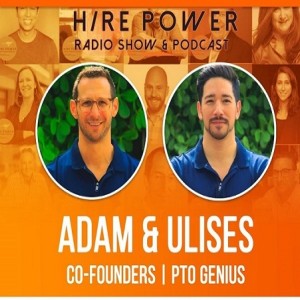
Our guest today: Adam Gordon & Ulises Orozco, Co-Founders of PTO Genius
With over 30 years of HR tech experience and a focus on employee benefits and leave management.
Adam & Ulises are serial entrepreneurs who founded PTO Genius to help companies increase job satisfaction, attract/retain top talent and lower payroll liability by re-imagining what employees can do with paid time off.
Today we discuss:
- The pros & cons of Paid time off structures
- How to implement the right structure for your unique company
Challenge today with Paid Time Off?
Potential liability for the company because it creates an environment where not self managed, managed like a traditional policy. Too dependent on the individual manager approval.
- Using unlimited as a marketing tool. But there really is no unlimited
- Creates more legal liability
- People either don't take time off or too much time off
- The bedrock to unlimited PTO is good culture. The bedrock of trust which can NOT be managed by managers.
Why is this important to the company?
- Culture
- Trust
- Mutual respect
- Accountability
- Unlimited PTO looks desirable to avoid the liability of the employment contract
- Avoid the management
- Payout at the end of employment
Rick’s Nuggets
- PTO is not a reason why people join your organization
- How PTO is managed/supported is a snapshot of your leadership style (which is the root of why people stay or leave your company)
- Benefits & perks are icing not the cake.
How do we do implement the right PTO policy?
Questions to Ask First: Can we trust our employees? Do I want to give managers the authority to manage when people are away?
- Starts with leadership and how you value the employee
- Communication- transparency
- Being Vulnerable as leaders
Start with the right culture. Most startups should start with a traditional PTO model
- Better to keep yourself out of a legal liability.
- Can't eat the cost of litigation
- Employees with unlimited PTO end up taking fewer vacation days than their limited PTO counterparts (13 days versus 15 days). SHRM source link HERE
If you want to implement an unlimited PTO policy
- Ask yourself if you are really built for it?
- Don't call it a “unlimited” policy but a “Self Directed” PTO
- Document the policy
- Define non starters- set up bumpers
- Manage that everyone has access to time off
- Encourage time off
- Creative time off incentives
- Assignment & tracking should be no disruption to workflow
- Set up a calendar where people know when people are off
- Hand off before someone goes away
Rick’s Nuggets
- Look at your company values and align your PTO policy with that which aligns with your leadership style
Key Takeaways:
- Unlimited policy- do you meet the above criteria. Is it truly self directed?
- Proactive hand offs
Guest Contacts:
Website: PTO Genius
Email: hello@ptogenius.com
LinkedIn: Adam Gordon or Ulises Orozco
Twitter: Adam Gordon or Ulises Orozco
Thursday Aug 06, 2020
Thursday Aug 06, 2020
“I want to work with really smart people and here is a list of schools that this person will have graduated from” said Lawrence, the CEO. “I do not want to interview anyone who has not come out of one of these schools”.
My gut reaction was to simply say, “no thanks” and exit the meeting. Afterall, this CEO was going to be difficult to work with.
My response back was simply “Confirmation Bias”
We favor information that confirms our world view and this helps us to reduce any cognitive discomfort that discounts our values and realities. As Entrepreneurs, we are more susceptible to this bias because we are so focused on the task at hand. This reduces our ability to objectively make decisions that are best for the business.
Lawrence laughed, grabbed the sheet of paper and threw it in the trash. “Ok find me smart people”!
The truth is the strongest people often surface in the most unexpected ways and your bias clouds your vision of the truth!
Our guest today: Bruce Marable, Co-founder & CEO of Employee Cycle, the all-in-one People Dashboard
Bruce is a Philly-based serial tech startup founder. When Bruce is not helping HR leaders better use data to make smarter workforce decisions, he is making music playlists on Spotify, taking self-care at the boxing gym, or hunting for the best bread pudding around town.
Today we discuss:
- Why Bias needs to be eliminated from your hiring process
- How to deliver an unbiased, evidence based interview
Challenge today?
According to Wikipedia, Bias is defined as a disproportionate weight in favor of or against an idea or thing, usually in a way that is closed-minded, prejudicial, or unfair.
We all have bias. It is important to eliminate it for one simple reason… Your company’s success
Why is bias elimination important to the company?
- More diverse companies succeed
- More revenue
- Higher productivity
- Cannot properly market to diverse groups of people/customers
- Totally different backgrounds bring different ideas
- More diverse individuals create more self awareness, well rounded thought process
- Disabilities
- Sexual orientation
- Ethnicity
- Ageism
- Re entering workforce
- Incarcerated
- Parenting
Rick’s Nuggets
- Innate Biases
- Overconfidence: Subjective confidence in ideas or decisions
- Illusion of control: overestimate ability to control situation or outcome
- Anchoring/Adjustment: past experience predicts plans for future
- Confirmation: preexisting beliefs- devalue contradictory information
- Cognitive tunnel vision
- Curse of Knowledge : experts assume similar content understanding in others
- Optimism: See the positive outcomes… delusional optimism
How do we solve the bias issue?
Mindset
- Open to People who are different
- Everyone is on equal footing
- Allow people come in as being perceived as qualified
- Vs. unqualified
- Reinforce that they are qualified
- Eliminate your assumptions- college degree
Actions
- Recruit from a diverse pool of job candidates
- Remove all language in job descriptions that may have bias.
- Standardize the interview questions.
- Perform the same due diligence on all candidates whether that candidate is a referral or not
- Give all candidates the same level of respect
- Blind the resume process
- Remove bias from likability
Rick’s Nuggets
- Customer experience mindset - applicants are your customers
- More difficult to say No than yes
- Conduct a qualifying call with most
- Interview questions
- Pre-determined and assigned to the individual interviewer according to the order in which they participate
- Must gather evidence to support the decision either way
- Feedback & closure
Key Takeaways:
- Acknowledge confirmation bias.
- Review the language in your job descriptions
- Standardize your interview questions
Guest Contact:

Friday Jul 31, 2020
Friday Jul 31, 2020
Key Points for Episode:
Timeline for Video Interviews - 72 hours
1- 45 minutes
2- 45 minutes
3- 45 minutes
4- 45 - 60 minutes
Decision - 24 hours from Final Interview
You must have your questions pre-written and assigned to the individual Interviewer
Questions designed to gain evidence of cultural alignment
** DO NOT just pick random behavioral questions!
They must have purpose and be tied to your company values!
Behavioral Questions
Follow up each question with the “How & What”
The purpose of each interview is to get to the “truth” of who this person is and how they align with company core values. Our goal with each question is to find hard evidence one way or the other. Past performance is a key indicator of future performance. We are going granular to understand the core of who this person is to fill your gut with accurate information to make the correct decision.
The Behavioral Interview: The simplest way to learn the behavioral model is to use STAR methodology. Let each interviewee outline the Situation & Task first. This is just the background of the story that you need to know to make the story make sense. Clear context! Look for difficulty, complexity or size of the challenge. What was the person trying to accomplish and why?
Approach: This is where we focus on the actions taken to address the issue, complete a task, solve a problem or improve the situation. We focus on the WHY here!
Focus in on this area the most and poke holes in the answers.
Each answer needs to be tested and must be followed up with why.
Look for Key details and explore them!
Why did you take that approach?
Why was that important?
Why did that work?
Results: What is the positive outcome for the story? What were the issues? Where did they fail? We are looking for tangible, supported evidence.
Video Interviews (Same Day Ideal)
- Ideal to line up back to back
- Schedule back to back or split them up 2/2 or 3/1
- Build a knockout question for each interviewer
Interview 1 - Cultural Value Alignment I
Interview 2 - Skills Screen
- Live working session to evaluate skills/communication
Interview 3 - Cultural Value Alignment II (optional) 24 hours from interview 2
Final Interview - Cultural Confirmation III & Offer preparation (Decision Maker)
Decision / Offer (24 hours max)
- Best to give immediate feedback
- Time kills hires, be decisive
Role Play
Interview Questions
Walk me through the steps you took to prepare for your last project / client presentation (preparation)
- What made those steps the most efficient?
- How did you do it specifically?
- Timeline set?
- Potential Challenges identified and how were they prioritized for consideration?
- What were the things you missed?
- What was the result?
- Why was this important to you?
**Give me an example of something you tried that failed miserably (keep light & fun)
(innovate without fear)
- What were the circumstances that justified the risk
- How was it implemented?
- What was the potential upside if it worked?
- What was missing?
- What would you have done differently?
- Why did it fail?
- What did you learn?
Tell me about a time when it was necessary to admit to others that you had made a mistake. (accountability)
- What was the specific mistake
- How did you identify the mistake?
- How did you handle it?
- Why did you choose that particular approach?
- What was the lesson learned?
- What did you do differently going forward?
Tell me about the last project you worked on where you were major time constraints (own it/quality effort)
- What steps did you take to ensure quality?
- What shortcuts were taken?
- What mistakes were made
- How did the client receive the work?

Thursday Jul 23, 2020
Thursday Jul 23, 2020
We are now remote. And we are learning so much about what it takes to keep your people engaged and productive. The balance between communication and micromanagement is often the Biggest challenge.
Here’s what we’ve learned: Consistent communication with ultra flexibility is working. Encouragement to take care of yourself first: ie: a walk, bike ride or step away is increasing productivity. Virtual happy hours are helping to forge team comradery.
Our guests today: Michael Houlihan & Bonnie Harvey, Founders of the world's top wine brand, Barefoot Wines
Beginning with virtually no money and no wine industry experience, they employed innovative ideas to overcome obstacles, create new markets and forge strategic alliances. Michael & Bonnie pioneered Worthy Cause Marketing and performance-based compensation. They built an internationally bestselling brand and as a result were acquired by E&J Gallo. Today, they offer their Guiding Principles for Success (GPS) & Shelf Smarts courses to help consumer product brand builders achieve success by maximizing the value of their human resources.
Today we are discussing:
- Virtual challenges today
- How to build company culture to an off premise workforce
Off Premise challenge today?
- Disengagement
- Not routine
- Physical commitment
- Daily encouragement
Why is this important to the company?
Two biggest hidden costs in every business!
- Reduce turnover
- Increase engagement
Good people transform to great people through growth
- Improve skill sets & relationships
- Allow people to do the work they like to do and not do. Allow them to create their own roles.
Rick’s Nuggets
- Accountability & Productivity
- Remote causes you to really put your business under the microscope
- Cost of a Bad hire is 30% of individuals earnings (US Dept of Labor)
- Does not include Morale & Productivity loss costs
How do we do it?
Find good people & build great people *****
- Keep people from being isolated (Team based)
- Culture of permission - make mistakes right. Don't hide mistakes.
Hiring tactics?
Overkilling Orientation
- Over educate
- Money map
- About understanding how the money flows to get to your paycheck
- 2 division company
- Getting into the cause & effect of the business
- Sales & Sales support
Include people in the solutions
- Everyone asked to contribute their ideas
- Footsteps to the wine in stores from the receptionist! (recognition)
- Throw problems out on the table and allow people to contribute
- Promote the idea that everyone has a voice
Rick’s Nuggets
- Finding good people requires work & a lot of conversations
- Creative ways to encourage engagement
- Virtual happy hour
Key Takeaways:
- You have a responsibility to improve your hires. Find their talents and expand upon them
- All companies have 2 divisions- sales & sales support
- All salaries start from the community not from the company!
Find Bonnie & Michael here:
Business Audio Theatre Linkedin
Websites: www.thebarefootspirit.com & www.consumerbrandbuilders.com
Thursday Jul 16, 2020
Thursday Jul 16, 2020
High performing individuals come in every flavor. They can not be identified by looking at a resume! They can only be discovered by understanding who the person is, the values they hold dear and the track record of the impact they have made in the past. Every day, your company loses money when you allow personal bias to influence your hiring decisions without proper evidence. Quite often, the strongest hire is not the person you envisioned for the role.
Our guest today: Kelly Robinson, CEO of RedDotMedia.
He founded Broadbean.com Inc 2001, which was acquired by CareerBuilder in 2014. Now he lead RedDot Media, recruitment advertising agency with a particular skill in programmatic advertising campaigns. Kelly has spent the last 25 years in recruitment and recruitment technology, during which time he has grown, integrated, bought, and sold businesses in both the UK and US.
Today we are discussing:
- Why you need to consider hiring people over 45+
- How to value wisdom & hire modern elders
Why don’t employers hire older people?
- The person they are hiring probably has more experience than they do.
- Oh, why would he want to work for me,
- They have done my job for 20 years!
- They don’t have the right degree.
- Younger workers are better because:
- They have more energy.
- They're more tech savvy.
- They're more willing to give discretionary effort.
- They'll work for us for the next 30 years.
- They have less health problems.
The reality is younger workers have just as many problems as older workers.
- Older workers are better because:
- They don't have kids pulling them constantly off their game (Uh oh! Parent bias!)
- While possibly not as tech savvy, they have experience in getting things done in different ways and they won't panic when the internet goes down for 15 minutes.
- They grew up in a time when work life balance meant you worked until the job was done.
- They're willing to by loyal to you for the next 7-10 years, which is more loyalty than you'll get from anyone else you hire.
- Older workers statistically don't miss work more than younger workers.
- In the next few years, 35% of our workforce will be 50 or older.
- And 8% of them—about 13 million workers—will be 65 or older.
- It’s hard to finance a 30-year retirement with a 40-year career - Chip Conley (Airbnb 52)
The average duration of unemployment for older job seekers has dropped sharply since 2012 (though still long); it’s down from roughly 50 weeks to 34 weeks for job hunters age 55 to 64. In other words, it now typically takes about seven to eight months to find a job if you’re over 55.
About 29% of job seekers 55+ are considered long-term unemployed (looking for work for 27 weeks or more); while that’s still high, it’s down dramatically from roughly 45% in 2014
AARP surveyed 3,900 people age 45 and older, 61% said they’ve personally seen or experienced age discrimination. Among those who’ve applied for a job in the past two years, 44% were asked for potentially job-losing age-related information such as birth dates and graduation years It’s almost an acceptable bias.
Why is this important to your company?
- Older workers may be better because:
- They don't have kids pulling them constantly off their game (Uh oh! Parent bias!)
- While possibly not as tech savvy, they have experience in getting things done in different ways and they won't panic when the internet goes down for 15 minutes.
- They grew up in a time when work life balance meant you worked until the job was done.
- They're willing to by loyal to you for the next 7-10 years, which is more loyalty than you'll get from anyone else you hire.
- We all miss work for stuff. Older workers statistically don't miss work more than younger workers.
The fastest-growing age demographic of employees in the workplace is 65 and older, which has experienced a 35% jump in numbers over the past half-decade. In the next few years, 35% of our workforce will be 50 or older. And 8% of them—about 13 million workers—will be 65 or older.
- According the U.S. Bureau of Labor and Statistics, 22.2 percent of the workforce is 55 years old and over!
- Research from the National Council on Aging has shown that modern elders have lower absentee and turnover rates than younger workers.
- Ultimately, age will be less of a factor. The Bureau of Labor Statistics projects that those ages 65 and over will experience the fastest rates of labor force growth by 2024.
- Many people who reach retirement age now are often healthy enough to run marathons, build houses
Rick’s Nuggets
- You can NOT tell if someone is good for your company via a resume! Anyone who says otherwise is delusional
- Recruiters/hiring managers filter people out
- Ageism
- Overqualified
- Too expensive from a benefits perspective
- Not technically aware- can't learn new skills (stereotyping!)
- Not the right educational experience
- Not a cultural fit (fitting in with people in their 20’s)
How do we do it?
- Start valuing wisdom
- Appreciate that you have no choice
- Promote diversity & inclusion… which includes AGE
- D&I increases innovation
- Productivity
- Demand that those responsible for recruiting Talk to people everyone who is reasonably close
- Eliminate educational barriers
- Anyone over 5 years experience, ignore the educational background
- Develop a phone screen process to gather evidence of success
- Judge viability by gathering accurate data
- Take notes
Guest Contact:
Email: kelly@reddotmedia.co
Twitter: @KellyJRobinson

Thursday Jul 09, 2020
Thursday Jul 09, 2020
Not having a clearly defined corporate culture document is a recipe for failure. Why? The culture document is a business plan for how your people are expected to behave, interact and resolve conflict. It is your saving grace when things go sideways! You must provide a clear and accurate picture to everyone you interview about the good, the bad and the ugly of the organization and the expectations of behaviors that result in success in their role.
Our guest today: Jeff Wald, CoFounder & President of WorkMarket
Jeff Wald is the Founder of Work Market, an enterprise software platform that enables companies to manage freelancers (recently acquired by ADP). He also founded several other technology companies, including Spinback, a social sharing platform (purchased by salesforce.com).
Jeff is an active angel investor and startup advisor, as well as serving on numerous public and private Boards of Directors. He also formerly served as an officer in the Auxiliary Unit of the New York Police Department. Jeff is the author of The Birthday Rules and The End of Jobs: The Rise of On-Demand Workers and Agile Corporations. Jeff frequently speaks at conferences and in media on startups and labor issues. He is an expert at building cultures that thrive.
Today we are discussing:
- Why it is critical to have a culture document
- The three steps to building your own culture doc
Why does a company need to have a culture document?
- Not very clear about the culture of the company
- First stages you hire the people that you know
- First months/years are the most difficult
- Very difficult to make sure you work well together
- When you exhaust your talent pool/first level network
- Then you branch out
Do people really understand the nature of being at a startup?
- Terrible hire / fit amazing person, really a vanity hire
- Understand how to be resource constrained
- Amazing person, disastrous fit
Why is this important to the company
- Resource allocation problem
- Few dollars, time
- End up giving a longer rope so the failure impact is that much greater
- Cost the company Millions of dollars- spending power, budget
How do we do it?
- You should not hire quick at the executive level
- They need time to succeed
Creating a culture Document
- Start with your values
- 6-8 core values of the company
- Different to everyone
- Be clear with what it is you believe
- Who you are (mission statement), where you are going (North Star) & why you are there (purpose)
- Needs to be super clear to EVERYONE in the organization (repeat it again and again...when people start complaining about hearing it too often, you are halfway there!)
- Behaviors & Policies
- Behaviors to support the values
- How we run our business
- How you hold meetings, how you promote, how you do business with clients, how you communicate, how you make decisions, your social events, etc., all have to support your values, otherwise what's the point of having values?
- People
- What are the behaviors that everyone at the company should strive for? Do we want people constantly learning and growing, or just doing their job well and going home? Are they questioning things, or just rowing when told to row? How do they disagree with a decision?
- What do we expect from our managers? Are the efficiency drivers or coaches? Are they transparent? How do they give feedback?
Key Takeaways:
- A culture document brings clarity to you and your team
- Repeat it again and again, because your team has to know it
- Use the document as hiring and promotion guide
Guest Contacts:
Book: The End of Jobs: The Rise of On-Demand Workers and Agile Corporations (Amazon)
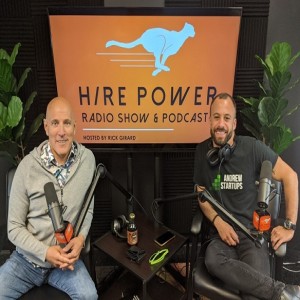
Thursday Jul 02, 2020
Thursday Jul 02, 2020
Marketing and hiring are far too often major failure points because they are started too late. The right time to start marketing is before you launch your product. Just as the right time to hire is before you feel the pain of needing the work to be done. It is never too soon to to proactively start your marketing or hiring process. The key to not failing is having the structure in place before you feel the pain!
Our guest today: Andrew Miller, CEO of GrowthExpertz
Andrew is a Startup Marketer who's been traveling the world working with early-stage companies. After driving growth for 3 multimillion-dollar startup exits, including a 500startups project in San Francisco, he founded GrowthExpertz.
Andrew's specialty lies in helping companies scale efficiently in the early-stages with both growth coaching and remote consultancy. He’s written for INC magazine, StartupGrind, and StartupNation. Andrew is also a prolific #DigitalNomad who in the last decade has visited, lived, and worked from over 70 countries.
Today we are discussing
- The right time to start marketing efforts
- How to kick off marketing for both product and people
When should a startup start marketing?
- Start marketing right now
- Pre launch, start building a strategy
- Landing pages, call to action
- Even still in stealth mode
- Coming soon, gathering prelaunch beta email list
Why is this important?
- Prioritize marketing too late
- Show investors that you have traction
- Do things that don't scale in the beginning
- Marketing drives your launch
- Launch with an email list
- Bootstrap marketing- drive organic traffic during the early stage of the business. Before launch
Rick’s Nuggets
- Marketing directly leads into hiring
How do we implement marketing & when?
- Online presence- marketing foundation
- Create landing pages, website,
- Social media pages
- Analytics
Start organic marketing
- Organic marketing channels
- PR - start creating relationships with podcast,
- Create content with call to action
- Build to 500 emails of beta testers & followers pre launch
Launch product
- Create press release, go live
Scale the marketing strategies that work
- Go into launch with traffic
- Be able to go into investors with relevant data
Rick’s Nuggets
- With hiring:
- Identify target hires
- Have conversations, network
- Gain buy in to win the hire
Key Takeaways:
- Prioritize foundational marketing early in the game
- Greenlight your organic marketing before the product launch
- Know your kpi’s, analytics
Guest Contact:
- GrowthExpertz - For Funded Startups
- Andrewstartups.com or Instagram - For Bootstrapped Startups
Thursday Jun 25, 2020
Thursday Jun 25, 2020
Ever finished an interview with a great person and just felt unsure or maybe you need more data to make the decision either way?
This all too common scenario is caused by a poorly executed interview process and not asking intentional questions designed to gain the evidence to support a decision either way. Today we will be discussing how to avoid the pitfalls of this conundrum when hiring for your company.
Our guest today: Steve Pfrenzinger CEO & Head Peformance Coach of Pfrenzinger Agency, Inc.
Steve Pfrenzinger is an entrepreneur, a coach to entrepreneurs and a Hall of Fame investor in entrepreneurs. He’s also an author, speaker, and Self-Awareness expert helping entrepreneurs, innovators and change agents solve big problems. Steve is also a Forbes Coaches Council member.
Using his decades of experience building multiple 8-figure businesses, where he hired over 1,000 team members, Steve has helped hundreds of clients make better decisions, plus expose their career and business blind spots that can clear their path to success.
Today we are discussing
- Why gathering evidence is critical to support your decision
- What Steps need to be taken to avoid this conundrum
Why is gathering deep evidence important
- You have found a very good candidate, but you are just a little unsure, you want one more data point
- E.G., 3 said yes and one said no or “not sure”. then what?
- Finding out how people are “wired mentally” in DISC or Myers & Briggs might impact the decision
Why is this important
- Personality type is a predictor of future behavior and key to major hiring decisions
- Knowing one’s “preferences” is key, how they “lean” in certain situations, e.g., Thinker vs Feeler
- Ask Steve to define a “preference”
4 elements to the personality
- Compare DISC styles to Myers & Briggs types. Cheat sheet below. If you know one, you know the other. If you know neither, you need to find out.
- D = ET (Dominance = Extroverted Thinker)
- I = EF (Influence = Extroverted Feeler)
- S = IF (Stability = Introverted Feeler)
- C = IT (Consciousness = Introverted Thinker)
Rick’s Nuggets
- Interview questions need to be intentional
- Digging deeper uncovers the truth…. How & Why?
- Must avoid injecting your own personal bias/agenda
How do we do it?
- Ask them for their DISC style or M&B type
- Have them take a test at www.16personalities.com
- Fast type them with Steve’s 2-page form, uses easy-to-learn computer metaphor
- Fast typing form, Steve has one for all that ask. Contact him at steve@stevepfrenzinger.com
What is Fast Typing?
- PIPO model
- Power
- Imput
- Process
- Output
Rick’s Nuggets
- Proper sequence: Interview => Assessment => Interview close
- Assessments often done too soon
Key Takeaways:
- Personality Type and the behavioral preferences (tendencies) it highlights can further insure the success of key hires.
- You can fast type others without a formal test in minutes, with the PIPO fast typing form
Check steve out at www.coachstevep.com or email him at steve@stevepfrenzinger.com He has many coaching and educational programs for executives and management teams, from entrepreneurial ventures to major corporations.

Saturday Jun 20, 2020
Saturday Jun 20, 2020
Why you need to hire trusted talent to build and scale your startup. Referrals are still the strongest way to stack the deck with talent for your organization. But you cannot shortcut the interview process. Just because a person worked well in another organization does not mean they will be successful at yours. Diligence in gathering evidence of value, growth and cultural alignment must be gathered to avoid making a bad hire.
Our guest today: AJ Bruno, CEO & Co-founder of QuotaPath.
AJ leads the QuotaPath team as CEO & Co-Founder. Prior to QuotaPath, AJ spent 6 years at TrendKite, the company he founded and was president of in Austin Texas. At TrendKite, AJ led the go-to-market and sales strategy/execution and took that team from initial product inception through $20+ million ARR and 250+ employees. TrendKite was acquired by the public company Cision for $225 million in January 2019.
AJ is religious about vetting and hiring talent and has made over 300 hires in his career
Today we discuss
- Why trusted talent is the best option to build and scale your startup.
- What to do when you don't have a strong network
- The steps to take to hire through referrals:
Why is hiring “trusted talent” the best route
- Look into your own network of people you have previously worked with or go to a trusted source to help build the team you need to take you to the next level.
Why is this important
- Avoid running into bad hires
How do we do it?
- Reverse engineer your network
- Looking for trust and loyalty
- A lot of back channeling (connect with at least 5 people)
If you know the person?
- He needs to justify why for both parties
In the Interview process
- Disqualification questions- do you know who Elon Musk is?
- Tie questions to the importance of the role
Rick’s Nuggets
- Knock out questions
- Provide a growth path to avoid a transactional experience
Key Takeaways:
- Backchannel with at least 3 references if the hire is very strategic (the first hire in their position or respective position)
- Create a consistent process (with knockout questions or frameworks) if it will be a hire you will make multiple times (sales reps).
- Ensure that the person is sold on working with you and learning from you as much as possible if it is a strategic hire.

Thursday Jun 04, 2020
Thursday Jun 04, 2020
Will a subject matter expert be a better solution to hiring a leader for your company? We can all agree that there are different types of leaders. I am going to contend that the wiring of the leader you are hiring is more important than the pedigree that is brought to the table.
Our guest today: Ed Tyson, CEO of PerSynergy Consulting.
Ed Tyson is the chief executive officer of PerSynergy Consulting, architect of LeadershipSOPs, author of From Expert to Executive: Mastering the ABCs SOPS of Leading, and executive coach and consultant to both small niche brands and Fortune 500 companies. With a mastery of leadership refined throughout his years as a Marine, executive, coach and consultant, Ed guides executives, to key findings he has learned through intimate connections with a diverse array of leaders.
Today we are discussing
- How to identify the right leader for your startup
- What steps you should take to build the right job description to find the best candidate to fill this position
- What questions you should ask to ensure your candidate is the best fit for the job
Why not hire a leader in your startup?
I think we can all agree…
- ...leaders have a tremendous impact on your culture and process. The smaller the team, the larger the impact of each individual but particularly each leader.
- Deciding to add your next leader could either be that decision which propels you forward or sets you back.
- Leaders are more expensive and more capable of damaging your culture than individual contributors - so be certain it’s a leader you need, that you are clear about the challenge you need answered, and you are confident your candidate can indeed answer it.
- For example, there is a start-up client I am working with right now, just north of here in LA county. They are in the biotech space and have hired several key leaders from a much larger, global entity in the broader pharma space.
- The leaders they have brought on were extremely competent and well-positioned to lead the functions which they were hired to run. HOWEVER, they were not prepared to engage in both the breath of strategy and depth of tactics the job requires. Further, they are struggling with the lack of defined processes and support from other functions. Consequently, project timelines are being missed and their time-to-market will be impacted.
- Going the other direction on the 5, I have a client in San Diego county in the manufacturing business who is just reaching beyond the start-up phase. They have a relatively small corporate staff but almost a third of them are leaders with big titles but very small teams (with one or two subordinates a piece). Additionally, almost every leader is an internal promotion with no professional leadership experience – this founder has placed a lot of bets on continuing to cultivate raw talent but does not have the time to do it – which is admirable but making it difficult to grow beyond his current book of business or empower these leaders to really lead.
- At the end of the day, the team is too big and too inexperienced to comprehend and reach decisions without its leader (keeping the CEOs nose in the very parts of the business he has to escape to hit his growth targets).
- Both of these companies made the same mistakes (just differently). They both failed to clarify and challenge what they needed and ensure they got it.
- So again, my first tip is don’t hire a leader in the first place… unless and until you are confident you absolutely need a full-time person whose primary role is to structure, operate and perfect a community of effort.
- If that thought makes you nervous, if you're worried who will do the work, you might need someone to lead the work, not the people. Don’t fall into the trap of mistaking a technical lead, a senior subject-matter expert for a leader.
Rick’s Input
- Focus on correctly positioned talent
- Avoid vanity hires
How do we hire leaders then?
- Purpose of a Leader
- The purpose of adding a leader to your growing team is not to add to your subject-matter expertise, it is to ensure someone other than yourself wakes up every day focused on cultivating a willing, capable and sustainable community of effort. Leaders are no longer obsessed with their craft because every step a leader takes on the career ladder is away from their craft.
- Leaders are not obsessed with technical puzzles. They are obsessed with people puzzles. Their primary work functions are to structure, operate and perfect powerful communities of effort.
- Do they need to understand the work? You bet. But their work is different from the team’s work. And the better you understand that work, the work of a leader, the more likely you are to find the type of leader you need.
- Defining Your SCOPE
- For me, it all starts with understanding the SCOPE of the community of effort you need.
- SCOPE is an acronym which helps leaders remember the five most important architectural components of a community of effort. It stands for Strategy, Culture, Objectives, Purpose and Ecosystem. You can think of it as a replacement for the old mission / vision / values mantra which still permeates business schools today. In fact, Culture, Objectives and Purpose stand for exactly those same three components. The different being, the full SCOPE acronym adds the importance of understanding the players and interactions within your ecosystem and the strategies you craft by considering that ecosystem, how you deliver value to it (i.e. your purpose), the objectives you set (from both a visionary and near-term perspective) as well as the culture you have and the culture you’d like to have.
- Your best shot at getting the leader you need is taking your best shot at defining the company SCOPE and the departmental SCOPE for the team you want this leader to lead (and do it with your existing team if you can).
- Your clarity here will allow you to differential the team’s work from the work the leader must do to be successful. This will result in a rich, leadership-focused job description based on the real work of leading.
- Then you can use the interview to pressure test key concepts in your company and departmental SCOPEs across a broad set of applicants (think of it as free consultation) and dig into the how.
- Process Not Outcomes
- Don’t fall into the trap of listening to canned lists of outcomes your candidates come prepared to throw at you. Ask about the how, the process. How did they refine the SCOPE at their last job? How will they do it here? How will they stay in alignment with the departments to their right and left? How will they stay aligned with you? How will they translate it into clear work methods, roles and responsibilities, how will they structure rewards and recognition; how will they secure the knowledge and capabilities you need to succeed? What repeatable processes do they use to inspire and engage people, drive accountability, evolve the team, etc.?
- I think the most important thing is to gain insight into their own personal LeadershipSOPs – in other words, what are their standard operating procedures for structuring, operating and perfecting communities of effort?
Rick’s Nuggets
- Job descriptions
- Person type (builder, improver, maintainer)
- Performance metrics
- Evidence of past performance
- Performance tied to process
Key Takeaways:
- Don’t Hire a Leader in the First Place!
- Throw Away Your Job Description!
- Ignore Candidate Stories about Outcomes!

Thursday May 14, 2020
Thursday May 14, 2020
There is a flood of great talent on the market and the competition for those limited positions is heating up. With this rise in the talent pool the ability to properly access applications is a major challenge. The bar has been raised! Are you leaving good people on the table?
Our guest today: Shawn Sheikh, Co-Founder & Managing Partner of Pivot CMO
Shawn is a Silicon Valley & Beach serial entrepreneur and Y Combinator alumni. His specialty is helping companies scale from $0 to multi-millions in revenue, through both conventional paid acquisition and non-conventional growth hacks.
Apart from Pivot CMO, Shawn loves to work with founders to find creative ways to scale their businesses and owns and invests in a portfolio of small to medium sized businesses
Today we are discussing
- The challenges in a heavy applicant reply market
- How to effectively screen applicants to avoid false positives
What are the issues you are finding in screening applicants
- Quality
- Response rate
- Don't want to do the case study
Right Approach?
- Reply with application (google form)
Phone Screening
- Report to person call screen
Rick’s Input
- Job description- performance metrics and call to action
- CTA: 3 questions for submittal - to be completed for all applications
- Timing of the event…. ie: when to do a test
- Phone screen for Purpose
Current process that works
- Application process does work (cuts from 3k to 300)
- 20-30 people are qualified (phone screen)
- 75-80% show up for phone screen
- 6-8 to interview
- 1-2 to offer
Referrals- from employees
- 4 all hires
- One referral from a person they
Process
- Applicant review/application
- Phone screen -50% technical/ 50% fit
- Walk through assignment
- Test
- Interview
- Offer
Rick’s Nuggets
- Interview Structure & process tied to your Company values
- “What are you capable of achieving?”
- Make the call based on the person’s answers rather than the resume
Key Takeaways:
- Better screening questions during the process
- Addressing people’s needs before money
- Owning who you are!

Thursday Apr 30, 2020
Thursday Apr 30, 2020
The key to successful hiring is in uncovering evidence in a person's ability to align culturally and professionally with your unique company. … None of this evidence is on a resume! How do we gather evidence? First, not short cutting the interview process. Focusing on deep behavioral questions then confirming your conclusions with data through assessments.
Our guest today: Josh Millet, Founder & CEO of Criteria Corp
Josh started the Criteria Corp in 2006 with a vision to create a SaaS-based pre-employment testing service that would make the highest quality employee assessment tools accessible to companies of all sizes.
Criteria has over 4,000 customers in more than 40 countries across the globe. Their pre-employment tests are an efficient and reliable means of gaining insights into the abilities and tendencies of potential employees.
Today we discuss
- Assessments
- Why and how to use them effectively
- A process to properly assess the person you want to hire
Why are assessments important?
With all the advances in HR tech in the last ten years that have transformed talent acquisition, we aren’t getting better at hiring when you look at results. 46% of all new hires are unsuccessful. The problem is we are relying on 70-year old tools, resumes and unstructured interviews, to gather info on applicants and make hiring decisions. These tools are letting us down. Why is it important? Immense bottom line implications.
Problem with Resumes
- Poor, incomplete, unreliable information that in the end does not predict much
- 85% of resumes contain falsehoods or inaccurate information
- Inject unconscious bias into the hiring process
- Boston & Chicago study
Unstructured interviews don’t work much better. Highly subjective, most interviewees make decision about applicants in first 5 minutes, based on highly subjective Criteria
- Evaluating for good data - using objective data to reinforce your decision
- When you think about how to gather data to make good decisions on candidates you should be focusing on:
- Accurate, reliable info
- Objective data not subjective impressions
- Removing bias from decision-making
- Being forward-looking data: how can this person learn, evolve as job does, rather than just past experience
Why are assessments the answer to resume
- Focus on good reliable data
- Things that are relevant to the job. Data that is not subjective and predicts job performance
- Ie cognitive ability (best predictor or job performance, critical thinking, attention to detail learning ability, problem solving)
- Behavioral or personality assessments - Interaction driven roles
- EQ/EI- overlapping
Rick’s Input
- Confirmation of data gathered minimizes bias
How to do it?
- Moving past the resume
- Use assessments early in the process (high applicant to hire ratio)
- Right after the application
- Resume submittal
- Link to assessment in the job post
- Most common after the application has been accepted
- Passive searches (a bit later in the process)
- Assessment become a resume substitute
Process for Active
- Choose assessments that are job related
- Measuring things important to the role
- 30-40 minutes of assessment
- Tailor the testing for the role
- Run at the Application stage or just after (automated)
- Use results to prioritize the people that are more likely to succeed
- Interview
- Assessment can generate further behavioral interview questions tailored to the individual based off their results
Process for Passive (recruits)
- Smaller number of people
- Lower number of people interviewing
- Use later in the process when the candidate is more engaged
- Assessment after the phone screen
- During the interview or just before
Rick’s Nuggets
- Must gain a personal buy in BEFORE giving tests or assessments
- People perform better when they want something
Key Takeaways:
- Do things in your hiring process to get good data
- Make sure everything you are using has a purpose that measures outcomes related to it
Friday Apr 24, 2020
Friday Apr 24, 2020
How can you tell if someone is good just through a phone screen?
A BIG thanks to our guest today: John Driscoll, Co-Founder & CEO of Naked Development.
Part 1: Outlining Key Points for Episode:
- Phone Screening: From reviewing the application to proceed to scheduling a call should be between 2-4 days (MAX)
- Ideal timing for phone call: 45-60 minutes
Part 2: 3 components of the phone screen (understanding the person) Why, What & How
*PAIN (Why):
- Discussion part 1:
- Pain is the person's reason for talking to you
- Types of PAIN to be aware of from an employer prospective:
- LEGITIMATE PAIN
- Lack of Growth
- Work Content/Technical Exposure
- Leadership Issues
- Unappreciated, Under challenged, Underutilized & Underwater
- Commute
- SELF-INFLICTED PAIN
- More Money
- Personality conflicts
- Always open
John’s role “Hiring Manager”
*DESIRE (What): What is the environment that this person will THRIVE
(This is the part where the employer should look into whether or not the candidate is a cultural fit)
- Things to consider when taking a deep dive into their desire:
- Their Vision for where they will thrive
- Fit to your company
- Important note for employers:
- Cultural fit and Attitude are far more important than skills. Yes, More important than skills! Skills can be taught and acquired. Attitude and cultural fit are often woven into the fiber of who this person really is at their core.
IMPACT (How?) (Identify Level of performance)
- Evidence of Success
- IMPACT - Do they go above and beyond (This should be demonstrated by example they give you of their past success and how they work with others)
- Commitment to Personal Growth
- Phone Screen Script:
- *PAIN (Locate a solid PAIN) …. Dig, dig, dig!!!
- What is happening with your current role that is making you open to exploring something potentially stronger?(Very important one to begin with)
- *DESIRE:
- If you could create your next company, what would that look like for you?
- What is your vision of your next role?
- What type of environment do you flourish? Culture, Size, Role, & Domain?
- *IMPACT:
- Tell me about the most significant impact you had in your current role?
- *SKILLS:
- What are your core Strengths?
- COMMUTE:
- Where are you willing to commute on a daily basis? (push limits)
- INTERVIEWING: Currently: Interested:
- To properly pace out the process, where are you in the interview process?
- CITIZENSHIP:
- What is your current work authorization status?
- SALARY: Looking to make $
- What are your minimum salary requirements?
- AVAILABILITY:
- What is your availability to interview this week? (dates/times)
- ***OFFER ACCEPTANCE MAIN CRITERIA: 1: 2: 3: 4:
- What are 3 or 4 “Main Criteria” that you would need to see in a company for you to accept an offer with them?
Final Step: Connecting the Dots
Thursday Apr 16, 2020
Thursday Apr 16, 2020
Is AI the future of recruitment? Better yet, will AI replace the need for a resume? Tools are available to utilize AI in improving workflow and screening applicants. The question lies in their accuracy and viability in identifying the strongest people for your unique organization.
Our guest today: Neil Sahota, AI Expert & Author of “Own the AI Revolution”.
Neil Sahota is an IBM Master Inventor, United Nations (UN) Artificial Intelligence (AI) Advisor, Faculty at UC Irvine, and author of Own the A.I. Revolution. He is one of the few people selected for IBM's Corporate Service Corps leadership program that pairs leaders with NGOs to perform community-driven economic development projects.
In addition, Neil partners with entrepreneurs to define their products, establish their target markets, and structure their companies. He is a member of several investor groups like the Tech Coast Angels and assists startups with investor funding. Neil also serves as a mentor in several incubator/accelerator programs.
Today we are going to discuss
- All things AI, What is it, how does it help with hiring
- Why it is important today
- How to implement the effective use of AI into your hiring today
Why is AI important in hiring through today’s landscape?
- People looking for work should be looking for more than just a paycheck.
- Why is this important?
- People quit when you bring the wrong person onto the team
- Productivity plummets
- Ai can eliminate the need for a resume!
Rick’s Input
- Automating workflow
- Sourcing/screening
- Good at all things transactional
How do we start leveraging AI to optimize hiring in today's landscape?
- Using AI to eliminate ego based hiring decisions
- Story of Omelveney (law firm)- use pymetrics
- Testing for cultural value
- Allow you to evaluate for culture and team fit
- Ai tools to analyze how well code is written
AI Tools Currently Available:
- Pymetrics: https://www.pymetrics.ai/
- Paradox.ai: https://www.paradox.ai/
- Ayra: https://goarya.com/
- Eightfold.ai: https://eightfold.ai/
- Xor.ai: https://www.xor.ai/
- Pandologic: https://www.pandologic.com/recruiting-with-ai/
Rick’s Nuggets
- Add CTA’s into your job postings to allow the cream to rise to the top
- Innovation is eliminating the resume
Key Takeaways:
- Elimination of resumes
- Reduced bias in recruitment
- Increased diversity & inclusion (by accessing “non-traditional recruitment pools)
- Quantifying cultural/team fit
Tuesday Apr 14, 2020
Tuesday Apr 14, 2020
Special Episode!
Video Interviews are the new necessity. But what is the best way to run an effective process? Today we breakdown the framework to run a strong, evidence based video interview. Through partnerships with fully remote based companies, we are sharing what has proven to produce the strongest hires. RIGHT NOW is your opportunity to elevate your companies productivity by hiring stronger talent.
Key Points for Episode:
Timeline for Interview Process
- Startup- 7-10 business days max
- Review - 24 hours from submittal
- Phone Screen - 48 hours (Day 4 max)
- 45-60 minutes
- Video Interviews - 72 hours (Day 8 max)
- 1- 45 minutes
- 2- 45 minutes
- 3- 45 minutes
- 4- 45 - 60 minutes
- Decision - 24 hours from Final Interview (Day 10 max)
Interview steps
- Phone Screen - Phone / Video conversation
- Your Goal
- Learn about the person!
- Understand: Pain, Desire & Impact
- Not to pitch your company, job or yourself
- Video Interviews (Same Day Ideal)
- Ideal to line up back to back
- Schedule back to back or split them up 2/2 or 3/1
- Build a knockout question for each interviewer
- Interview 1 - Cultural Value Alignment I
- Interview 2 - Skills Screen
- Live working session to evaluate skills/communication
- Interview 3 - Cultural Value Alignment II (optional) 24 hours from interview 2
- Final Interview - Cultural Confirmation III & Offer preparation (Decision Maker)
- Decision / Offer (24 hours max)
- Best to give immediate feedback
- Time kills hires, be decisive

Thursday Apr 09, 2020
Thursday Apr 09, 2020
Remember that person who you really wanted to hire but they took a job somewhere else? Now is the time to reconnect. Through no fault of their own, great talent is being displaced due to the pandemic. Now is the time to proactively hire and raise the level of performance through opportunistic hiring! This crisis will pass. And when it does, emerge as a much stronger organization and be positioned to crush your competitors!
Our guest today: Jeff Erle, Former CEO of MobilityWare
Jeff has held numerous C-level positions throughout his career. His experience spans across start-ups, small privately-held and large public enterprises including ADP, Western Digital, MobilityWare and most recently as the COO at Blast.
Jeff focuses on building high-performing teams and evolving award-winning cultures focusing on multi-generational workforces, developing/coaching key executives, and helping companies develop strategies to scale for growth and/or exit.
Today we discuss
- Why it is a great opportunity to hire
- A-players: what are they?
- How to identify and elevate your company performance during this downturn
Why is this important evaluate and proactively hire now?
- Talent is your #1 asset
- You now have the opportunity to upgrade your talent
- Missing an amazing opportunity to settle for the first people to knock on your door
- Now you have the ability to find an abundance of a players
Obviously, the Covid-19 virus has changed the world’s landscape like never before in our lifetimes. In particular, for businesses of all sizes, the nature of the workforce has and will continue to evolve, especially given the looming changes to the large number of workers that will be looking for work. Whether already or soon to be unemployed, or working for a company whose business model has been adversely impacted, millions of people will be applying for open positions later this year unlike anything we have seen in a very long time.
What's an A-player?
- top 10% of experience, capability, for the compensation you are willing to pay for the role.
Given that, for most companies, people are their greatest assets, the challenge will be to retain your A-players. And the opportunity would be to use this historic dynamic to “upgrade” your team and your organization. We’ll focus today on the latter, using the talent either already available or soon to be to assure our businesses come out of this cycle stronger than ever before.
Rick’s Input
- SalesForce, CEO Marc Benioff (tweet- 2200 jobs open…… prioritizing referrals of friends & family who have lost jobs.
- A-player - right profile (builders/startups), cultural alignment
- Desire should be workable
How do we start?
First step is to develop a definition of what an A-player looks like for your organization.
- One who is among the top 10% “available” for the open (or too be upgraded) position
- “Available” means: they are willing to accept an offer given the compensation level offered, in a culture such as yours, in your particular industry and location, with the resources available to them, with specific accountabilities/responsibilities, and reporting to a specific person
- Discuss examples...
Second step is to take an inventory, or a snapshot of your people assets and the level of their quality on an individual basis:
- Identify the “Pioneers” (A-players), “vacationers” (maintainers), and the “prisoners” (those always complaining… but they never leave; they feel handcuffed...)
- Methods to accomplish this include: (1) performance management tools (reviews, feedback, etc.) commonly used at year end for merit increases, and/or (2) “force-ranking” individuals either within departments, or if small enough, across the entire organization. (NB: There are numerous views/debates of the efficacy of force-ranking… but I have used it successfully, especially in circumstances such as this, when economic times demand tough decisions around headcount.)
Last step is to assure your recruiting strategy, methodologies and capabilities can fulfill this goal
Be diligent
- Shift focus to finding the best; this may mean balancing identifying and vetting “passive” candidates with “active” candidates.
- This means you cant be lazy. Its easier/faster to work only with the myriad of resumes and candidates that will be applying to your company this year, but they may not represent the best pool of A-players available to you.
- Ways to assure this include:
- If you have internal recruiting teams, assure they are aligned with your remit of seeking passive candidates as well as active.
- Get a good third-party recruiting partner to find the passive A-players and focus on presenting those people to your hiring manager(s).
Embrace increased volumes and/or new modes of interviewing
- Phone screens
- Video interviews (zoom, skype, etc.)
- Learn best practices on how to do these; many do’s and dont’s lists now available
- Teach managers how to do an appropriate phone screen and video interview
- Pre interview prep and internal alignment amongst interviewing teams
- What are the top key capabilities you all want for the role?
- Who is vetting which ones?
- Who is determining cultural fit?
- Who is making the final decision? Is it unilateral, consultative, or consensus?
- Agree on Who is “buying”, who’s “selling” during the process?
Remember:
- The more time you spend up front the less time you spend in the interviews themselves
- Poor managers don't want to do the work up front to coordinate
- You need to stand out to be the memorable company to attract the A-player.
- People go to work for good leaders/managers (converse of that's what they quit), not just good companies.
Rick’s Nuggets
- Build a list and say Hi
Key Takeaways:
- Now is a great time to re-evaluate your talent, your greatest asset, and upgrade as necessary
- To do so, you will need to embrace new internal areas of focus and philosophies, and your org will need to embrace and/or learn new ways of defining, finding, vetting and attracting A-player candidates
Friday Apr 03, 2020
Friday Apr 03, 2020
Fundraising is difficult especially when you are missing a hiring process! Understanding who you are and defining your process are critical in bringing confidence to your investors. It is NOT difficult to solidify a process! Bring confidence to your team and your investors by demonstrating that you understand the importance of getting the right people on the bus!
Today’s Quote:
"You must have confidence in your competence." - Elijah Cummings
Our guest today: John Yanyali, CEO of JuiceBot
John is an energetic entrepreneur who jumped into the business world by investing in the agriculture, education, construction, and technology industries.
He is the former COO of Elektronet, a digital technologies provider similarly focused on the Smart Industry. With John’s involvement, Elektronet became the largest manufacturer and developer of custom hardware and software systems in the Middle East and North Africa. In 2017, he joined Juicebot as an executive board member and last year, he was made the Chief Executive Officer of Juicebot. He builds and models a great company culture while providing inspired leadership
Today we are going to discuss
- Why having a hiring process is critical in raising funding
- How build your hiring process into your capital raise
Why does Your Hiring process affects fund raising
- Investors invest in the people more than the idea itself. A great team will turn a great idea into a great product or a service.
- The technical people who build the product are the key.
- Experienced, key players with a stake in the company will significantly contribute to the business.
- Besides creating a great product, they will help the management in creating new revenue streams.
- Technical due diligence is becoming more important for the investors. Where your product is from a technical stand-point will define its success. Therefore, the investors are spending a considerable amount of time trying to understand the technology behind your product so they can help you with the product-market fit.
- Technology companies need great technical people who own up to the mission of the company. We need to build not only a great company culture but also an authentic engineering culture.
- This will give investors the confidence to fund the company as the alignment of business and technical is necessary to succeed.
Why was it important to bring technical talent first?
- Technical people (engineers, designers, developers) are actually turning the idea into a product. They own the design process.
- We need to connect them with all aspects of the business whether it is marketing, sales, or investor relations.
- We need to create a platform where transparency is key to getting things done. We can not and should not compartmentalize. All the stakeholders of the company need to be aligned on the mission and the vision. That can only be achieved by being transparent and sincere.
Rick’s Input
- Highest failure rate is after seed funding
- Pressure from investors
- Most critical hiring happens after raising seed round
- Critical to have a process at this point!
- Sloppiness kills talent attraction, without talent no future capital raise
How to build hiring process to attract funding. Where do we start?
We need to surround ourselves with effective advisory board members to bring in the expertise we may not have. For many entrepreneurs, the decision to involve outsiders in their business may be a wrenching step. Some simply do not want to dilute their control by establishing a board of directors with formal responsibilities and authority. However, the introduction of an advisory board can help some come to terms with this decision, by enabling an entrepreneur to feel comfortable with the business of providing information to, and accepting advice from, an external group.
- Get the message out there to get help from the startup community
- You need a lot of help. Networking at events, forums… ask for help
- Figure out what you don't know. Then reach out to people with the problems you are facing and allow them to join you when the time is right
- If people are not joining, take a step back and ask why?
- We need to be open to working with other people and be open to feedback and criticism.
- Not isolating people to their lanes. Letting everyone involved contribute at all levels.
Rick’s Nuggets
- Outline your hiring process and timeline
- Phone screen, video/onsite interview, Decision/offer
Key Takeaways:
- The future of your business is dependent on your hiring practices. Every new employee will either contribute positively to customer satisfaction, growth and profitability, or contrasting have a negative impact on the business.
- By adopting a structured and comprehensive hiring process, you’re taking the first step in positioning your business for success by attracting the right talent. The type of talent that will help build the company culture, drive sales and ultimately position the company as a leader in the industry. Failing to instill the right hiring process will do the exact opposite, resulting in under-performing employees and wasting resources, time and money.

Thursday Mar 26, 2020
Thursday Mar 26, 2020
One of the most powerful tools in your hiring process in the phone interview. The challenge that we have is that it is treated as a screen just to find out if someone has the skills needed. And this process takes on average 5-10 minutes.
It is such an opportunity loss because your first point of contact should be about establishing the connection with the person regardless of the outcome. Your phone interview sets the stage for how you are perceived and severely affects your ability to hire.
Today’s Quote:
"When it comes to success, there are no shortcuts." - Bo Bennett
Our guest today: Chris Wood, Director of Recruiting for RISE Recruitment USA & Managing Director of theRecruitmentCollective
Chris has spent the past 15 years in the Staffing industry utilizing his background in Recruitment and Account Management to help Fortune 500 companies solve their hiring problems by recruiting top talent within the Aerospace, Automotive, Medical Device, Healthcare, Finance & Consumer Goods industries.
In 2017, he took on the role of Managing Director at theRecruitingCollective, an organization of independent, specialized recruiters and boutique firms centered around providing new, custom talent programs. His primary focus today is attracting over and retaining top talent to the Cannabis, CBD & Natural Products industries.
He previously sat on the board for National Human Resources Association – Los Angeles and is currently on the program committees for DisruptHR Orange County and San Diego. In addition, he is an advisor to numerous Recruiting Technology platforms and emerging Cannabis and CBD companies and a member of the National Association of Cannabis Businesses.
Today we are going to discuss
- Why phone interviews are a critical part of the hiring process
- How to conduct an effective phone interview
Why are Phone interviews more important now than ever?
- Understand the person
- Goals, skills & interests - Career path/motivations
- Passive recruiting - building a constant stream of qualified candidates
- Due to the lack of face to face; with Covid-19 restrictions on in person meetings, this is the only way to hire talent during these times
- Sets the tone for process
Positioning of your phone interview
- Setting a clear objective of what you want to get from the call; feel for personality fit with team, explanation/knowledge of necessary experience, understanding of career path and long term intentions
- Asking specific questions that address strengths of candidate that fills a need with your team
- Identifying interest of candidate in role & joining your team
How to conduct a phone interview
- Self reflection- identifying the hole on the team
- Understand what is really needed
- Identify characteristics of the person so you can create questioning to reveal if candidates fulfills your teams need
- How are you going to find what you need
- Creating the profile of the ideal hire
- Establishing must haves vs nice to haves
- Contact
- Asking the questions that are centered around the key things you need to know
- Strategic questioning
Rick’s Nuggets
- Purpose of the phone interview is to understand the person first
- Identify their reason for hearing (pain), what they want to be doing (desire) and what they have accomplished
Key Takeaways:
- Don't just look at the resume, definitely talk to someone. Take the phone screen very seriously
- Really get to know what the person wants. Get to know them!
Wednesday Mar 18, 2020
Wednesday Mar 18, 2020
How to evaluate for good discretion in the hiring process. Discretion is defined by Merriam Webster as an “Ability to make responsible decisions”. This is a quality that all leaders expect from their people but as we know, this is not always the case. How do you interview to uncover good discretionary habits?
Today’s Quote:
"A sound discretion is not so much indicated by never making a mistake as by never repeating it." - Christian Nestell Bovee
I’m Rick Girard and welcome to the Hire Power Radio Show. We help Entrepreneurs and hiring managers to avoid costly hiring mistakes by identifying a specific problem and providing proven solutions to enable you to WIN the right hire. We share insights from top-performing rebel entrepreneurs, disruptors & industry experts.
Like our guest today: Joseph Hopkins, Founder & Senior Managing Partner of The IPRESTIGE Emerge Fund, LLC
Joseph is a thought leader in AI, authentication and security technologies, He leads an innovative emerging technologies firm that serves as a proprietary first-mover advantage IP incubation model that concentrates on growth opportunities in digital identity protection, security and advance encryption technologies.
Prior to Joseph’s AI and digital identity security work, he served in key executive management roles for Fortune 500 companies, including Kaiser Permanente, 3M, GSK, Allergan, and KPMG. He has hired Hundreds of people throughout his career.
Which makes Joseph a perfect expert for today’s topic. Joseph, Welcome to the Hire Power Radio Show today!
Today we are going to discuss
- Why it is important to Connect with people while adding value
- How to evaluate for good discretion in the hiring process
Connecting with people to add value
- Listening skills
- No one wants to hear about your problems
- Pick up on a person’s cadence
- What makes the person tick as a person
- Navigate how you engage as to their preference
- If you miss the connection, you’ll never get it back
- Pick up folks who miss the 9-5 mentality
Rick’s Input
- No one cares about the words coming out of your mouth
- While hiring it is critical to be more concerned about the other person than filling your role.
How to evaluate “good discretion”
- Trusting the gut, instincts
- Less tricky the older the person is
- More experience, the less risk
- Interest or passion in the work
- Experience
- Clear signs around eye contact, body language, smile while talking, taking themselves too seriously, jovial.
- Education - important to him.
- Live your life based on what you have learned rather than the exceptions
The ingredients that keep people engaged in an
- Balance of coolness and professionalism
- *Discretion - overly doing something can affect the relationship with the client
- The more the client is comfortable the successful the interaction will be.
Rick’s Nuggets
- Opener “open to hearing about something career advancing”
- Don’t pitch your job, company or yourself
- Find out what’s happening with you?
Key Takeaways:
- Empirical stuff- education, background & skills
- Interpretative- talk to people that have worked with you. Subjective perspective
- His Gut instinct- in conjunction with the other two

Thursday Mar 05, 2020
Thursday Mar 05, 2020
The grind of being a startup entrepreneur is riddled with rejection and heartache. It is often thought that you need the money before you can build your company… And that’s just not true!
The truth is there are so many ways to self fund when getting started and today we are dissecting a case study of how one company utilized the gig economy to fuel their company growth.
Today’s Quote:
"It's not the lack of resources that cause failure, it's the lack of resourcefulness that causes failure." - Tony Robbins
I’m Rick Girard and welcome to the Hire Power Radio Show. We help Entrepreneurs and hiring managers to avoid costly hiring mistakes by identifying a specific problem and providing proven solutions to enable you to WIN the right hire.
We share insights from top-performing rebel entrepreneurs, disruptors & industry experts.
Like our guest today: Keith Ryu, Founder & CEO of Fountain
Keith is quietly fueling the future of work. As CEO of Fountain, the Series A-backed hiring platform for hourly workers, the Forbes’ 30 under 30 member holds the keys to the secret engine powering the gig economy. Each month, Fountain processes nearly one million applicants and enables companies like Airbnb, Chick-fil-A, Uber, and Safeway to make over 130,000 hires. Keith initially funded fountain by capitalizing on the gig economy.
Today we are going to discuss
- Why utilizing the gig economy is a great option to get your company started
- How to fund your company through problem solving.
- Story of Fountain
How do you hire when you have no funding?
- Found a problem that customers had and started building solutions while funding the work
- Challenges with creative financing
- Creative hiring through upwork
Rick’s Input
- Project based bootstrapping solution
- Take on consulting projects
How were you able to build your company?
- Capitalized in 2 ways
- financed the company initially by selling services
- found backup engineers on upwork
- Found someone to hire. Brought in work through upwork and gave the work to their engineer to pay her
- Emailed people who raised money on techcrunch. Offering to provide solutions for their business.
Key Takeways
- Be resourceful - upwork, email lists, etc.
- Do the hardwork - be relentless
Thursday Feb 27, 2020
Thursday Feb 27, 2020
The value of being able to directly text or call a person you are needing to recruit for your company is staggering. Want people to give you the opportunity to recruit them? Then you need to contact them where they will respond. Hint: It is not through email or LinkedIn.
Today’s Quote:
"Our greatest weakness lies in giving up. The most certain way to succeed is always to try just one more time." - Thomas Edison
I’m Rick Girard and welcome to the Hire Power Radio Show. Our mission is to help Entrepreneurs and hiring managers to avoid costly hiring mistakes by identifying a specific problem and provide proven solutions to enable you to WIN the right hire. We share insights from top-performing rebel entrepreneurs, disruptors & industry experts.
Like our guest today: Shafiur Rahman, Founder & CEO of Chatterworks
Shafiur has been the right-hand to founders and has built out the operational infrastructure for several companies, including Airbus Aerial, Specright and Connectifier ( acquired by LinkedIn February 2016) . He has extensive experience driving the day-to-day and long term requirements to ramp up a successful, high-growth startup.
Shafiur’s new startup helps you reach potential hires with their personal contact information!
Today we are going to discuss
- Why direct contact is critical to your recruiting efforts
- What contact information is most important
- How to find the contact information of the people you need to hire
- Typical scenario - What most do… industry best practices
Why do we need to find people's contact information when hiring?
- Low likelihood of response rate through the LinkedIn platform.
- Most people are not daily or even weekly on LinkedIn
- Passive people are not logging on at all
- People respond to Text directly. Much more than email.
- Limited to what LinkedIn offers/shows
- Have to work under their platform
What data is most useful
- Social intelligence
- Personal phone, email
Rick’s Input
- Text messaging has the highest response rate
- Open & Response rates
- 45% SMS, 8% email response rates
- 98% of texts are read, compared to 20% email
- Text messages has a 750% response rate over email
How do we find contact information?
- Hire a PI
- Background Check companies
- Build your own tech stack
- Piece together the various social platforms and cross reference data
- Your own personal aggregation
- Super labor intensive
- Can waste 30-45 minutes on just one person.
- Can still not get their direct contact information
Aggregate contact information?
- Build crawlers
- Buy public data
- Find tools
- Only gives you listed information, like home phone, no email
- If you want cell phone info, you have to pay for it
- Whitepages.com
- ZoomInfo - just business data
- spokeo
- ChatterWorks
- Swordfish
Key Takeaways:
- First identify who it is you want to hire
- Then get there personal contact information
- Where people respond the most, like start with text messaging
- 3rd- have my messaging down to ensure I’m touching people the right way. Not selling them, how can you help them in a career, how your job solves there problems.
Thursday Feb 20, 2020
Thursday Feb 20, 2020
Everyone in a hiring capacity has made a wrong hire in their career. I believe that this is a direct result of hiring for skills first. Here’s the scoop, a person’s skills can change, but you can't change who they are. And technical abilities are not a clear indicator of passion in the work.
Today’s Quote:
“Values should underpin Vision, which dictates Mission, which determines Strategy, which surfaces Goals that frame Objectives, which in turn drives the Tactics that tell an organization what Resources, Infrastructure, and Processes are needed to support a certainty of Execution.” — Mike Myatt
Our guest today: David Kinnear, Executive Mentor & Group Chair of Vistage International.
Dave Kinnear is a Business Advisor, Mentor and Executive Leader Coach. Through his affiliation with Vistage Worldwide, Dave convenes and facilitates peer advisory boards of Business Owners, Company Presidents, General Managers and Chief Executives dedicated to becoming better leaders who make better decisions and achieve better results.
Dave is also an executive-to-executive mentor to Executive MBA students at the UCI Paul Merage School of Business and a coach for the Center for Entrepreneurship at CalState University, Fullerton.
Today we are going to discuss
- Why a skills-based interview is dangerous
- values alignment is critical
- The framework for a successful interview
Why do people interview for competency/skills?
- Competency is easy
- This is what people focus on
- Today's workers need mastery, purpose and autonomy
- Shared values aligns well with the way decisions are made within the company
- We all want to do what's right for the tribe
- The soft stuff is not easy.
- Most CEO’s don't know what the real values are
- Profitability is what is really valued
- Transparency on the financials are missing
- Management decisions are the values
- Culture is the way things get done around here
- The way things get done is by making decisions
- Decisions are made reflective of the values
How do we Hire for Values?
- Running, Knees, shoes analog
- Know what the real values
- Ask questions to determine the person’s values
- Uncover the person’s values
- How someone works with others and makes decisions
- Ask questions that validate the core values
- Let the silence do the heavy lifting!
- When they have the values
- Reveal the mismatch in what they have now and where you align
- Skills can be learned
- The person you want is not on the street
- Hire them
Rick’s Nuggets
- Design questions around the corporate values (Amazon's leadership principals)
- Ask behavioral questions and dig deep. This uncovers the truth about who the person is
- "Walk me through a time"... Then ask why, why, why?
- Do not ask leading questions
- Ask the question and shut up!
Key Takeaways
- · Values are the foundation of an organization's culture.
- · An organization’s leader has only one critical job, and that’s to actively manage the culture
- · The leadership team must believe in and live the values every day
Thursday Feb 13, 2020
Thursday Feb 13, 2020
The truth is most of the good players are on the sidelines. Great people are inundated with mindless spam therefore most messaging is getting ignored. Here is the good news, Gallup reports that 7 of 10 people are open to something stronger.
Today’s Quote:
“Great people want to work on things that matter. Inevitably, a great person working on imaginary work will turn into an unsatisfied person.” - Jason Fried
Our guest today: Marc Hutto, Founder & CEO of Reveal Global Intelligence
Marc is the chief architect of Purpose-Driven Recruitment . This methodology focuses the talent acquisition process on the people who are hiring and being hired - as it should be. Revealing hidden and highly-valued talent in this way also aligns to Marc's stated vision for the company of delivering evidential value to every life we touch.
Today we are going to discuss
- Why you believe you can't find people
- The truth behind the myth (79 % of people on LinkedIn, polled, will not see a posting)
- A script to successfully find the people you need - A “pattern interrupt”
Why is the view that company’s can’t find people wrong?
- You can easily believe this because most people are not responding to job postings.
- Mindset - most people need to be approached.
- A lot of people approaching them
- A lot of noise, people not responding
- Only 21% of people are looking at a job posting
Reach out
- Outreach and response is the main challenge
- A lot of the same messages
- Get rid of the hooks and talk to the person
- Pitching the job is the wrong mentality
- Get into career coaching mode as quickly as possible
Rick’s Input
- Treat people all the same, regardless of where they came
- Hit people at their pain point first.
- What could be better?
How to recruit passive talent?
Mindset
- Approach people who did not come to you
- You have to be proactive
- Business owners and leaders take great care when investing in hard assets (equipment, supplies, inventory, etc.) - should we not have the same mindset when investing in a new colleague?
Reach out
- Don't pitch the job (it’s presumptuous)
- Digital video job description (digi-me.com) 1 minute
- Polite, professional, persistent - it differentiates
Coaching call
- Talk to people about them- their career/career drivers
- Look for the opportunity to provide career coaching
- Start a conversation around career drivers
Incumbent interview - document
- Why did you come here?
- Why do you stay?
- Challenges you encounter?
- Want someone to understand what it is like to work for your company?
Reasons why people stay (career drivers)
- Compensation & benefits
- Impact of the work
- Environment - culture, people, space,
- Personal & professional growth
- Leadership or management
Rick’s Nuggets
- On average 7-10 calls to get in touch a person today
- Write 5 email sequences
- Top Desires: Growth, Content of Work, Leadership
Key Takeaways:
- Hiring and being hired are big deals. Keep them humanized. Focus on Career Drivers.
- If you are an employer, you are in sales mode for top talent.
- Post and Pray has to give way to Polite, Professional Persistence.
- Purpose Driven Recruitment Toolkit: revealglobal.com/hirepower

Thursday Feb 06, 2020
Thursday Feb 06, 2020
Reference checking is so important... yet so underutilized. Why? Because it is too time-consuming! But when you fail to reference check you are dramatically increasing the likelihood of making the wrong hire. On top of that, you are missing out on a potential recruiting opportunity
Today’s Quote:
"References drive the industry." - Mark V. Hurd
Our guest today: Yves Lermusi, Co-Founder & CEO of Checkster
Checkster is powering talent decisions of organizations and providers of staffing and HR services. The company aims to improve the world's productivity and harmony by increasing job fit and work achievement, as well as personal career satisfaction and fulfillment.
Yves is a well-known public speaker and a Career and Talent industry commentator. He is often quoted in the leading business media worldwide, and has been named as one of the “100 Most Influential People in the Recruiting Industry”.
Today we are going to discuss
- Why checking references is important
- Voice reference checks vs digital reference checks
- The framework for a successful reference check
Reference checking, what’s the issue?
- People don't do
- Or they do totally wrong
Why are they doing references wrong?
- Only speaking to people that are given
- Talking to 2-3
- Talking to over the phone (filtered feedback)
Digital advantages
- Digitally people are more honest
- People pretend to be their own reference
- Consistency in the questions
Rick’s input
- Design references to evaluate against company culture
- Ability to dig deep on the answers
How to do references right
- Peers or managers recently. In direct contact
- Speak to at least 4 references - the measurement of success 80% in making a good hire vs. just 2 references
- Ask the right questions
- Relevant to the job and non-leading, (leading the witness)
- “Would you rehire?”
- Starting broad and going specific
- Do it digitally
- Saves time
Rick’s Nuggets
- How are you able to question deeper to understand the motivation of the answer?
- Written referrals don't give you the ability to recruit the person
Key Takeaways:
- Get at least feedback from 4 relevant colleagues (relevant:recent profesional close experience)
- Ask predictive questions
- Do it digitally
Thursday Jan 30, 2020
Thursday Jan 30, 2020
Posting your jobs can be a very frustrating exercise. Especially when you receive little to no response. Or worse yet, you receive an onslaught of unqualified responses.
Today is all about how and where to post your jobs to attract the right people! So we are going to geek out on advertising and teach the right way to utilize postings in your recruitment strategy.
Today’s Quote:
“Advertising is an environmental striptease for a world of abundance.” - Marshall McLuhan
Our guest today: Kelly Robinson, CEO of RedDot Media
20 years on the staffing recruitment and recruiting technology.
RedDot media is a recruitment ad agency with a particular skill in programmatic advertising and helping companies socialize their jobs with our Paiger platform. Prioir to RedDot Media, Kelly founded Broadbean.com Inc 2001, which he sold to DMGT in 2008, launched in the US 2009, and lead the strategic acquisition by CareerBuilder in 2014.
Today we are going to discuss
- Why Job postings fail
- Different ways to advertise
- Steps to take to implement programmatic job advertising
Where do people fail while posting jobs?
- Spray & Pray
- Pay no attention to the content
- Not thinking about what the person really looks like
- What is an important Mindset?
- Treating people who apply the same as a direct recruit.
- People who apply are just open, not sold on your company
What are the different ways to advertise?
Post & Pray - what most do now!
- Programmatic advertising
- Rule based job posting
- Only paying for results
- Click bidding to get your jobs on the top of the listOnly paying for results
Rick’s input
-
- Need understanding of what needs to be accomplished
- Performance metrics
- Content rarely touches the individual (never answers “what’s in it for me”)
How to implement programmatic job advertising
- 3 ways to do
- Use an agency to do it
- Buy a system and DYI & hire someone who is dedicated to doing it.
- Effective in duration based advertising.
- Cost per view or cost per applicant
- Best for 20+ jobs per month
Steps to maximize your job posting
- 20 or less
- Java engineer
- One-offs- start with Indeed
- Zip recruiter is good because of their advertising
- 65 mil lookers a month
- Identify 2 of 5 skills and talk to them.
- Write a good job description
- Have a lot of conversations
How to maximize relevancy
- Job descriptions: Talking to about emotional factors
- Dependent on what and where you are looking for it
- Forget the application process.
- *treat people not like an application but like they are part of the conversation
Key Takeaways:
- And as Jim Collins said it’s the Genius of the AND versus the Tyranny of the OR. and embrace the "Genius of the AND.
- Writing job ads is a skill - get better at it, AND have fun with it.
- Understand and qualify your job description ****A good question is what is NOT getting done while you don’t have this person.
- Job Applications are people who have given you permission to have a conversation with them. Your job is to figure out together if they should quit their job and come work from you.
- It’s not all about saving money a 3,6% unemployment rate!
Thursday Jan 23, 2020
Thursday Jan 23, 2020
Each individual brings a unique perspective to every interview conversation. Yet most interviews focus on “what you can do for me” almost entirely from a skills perspective. People want to know what’s in it for them before they choose to engage with you.
Today’s Quote:
"Though we may have desires or bold goals, for whatever reason, most of us don't think we can achieve something beyond what we're qualified to achieve." - Simon Sinek
Our guest today: Greg Toroosian, Founder & Managing Director of Elevate Hire
Greg Toroosian founded Elevate Hire after more than a decade in the Talent Acquisition space. Having previously worked for startups, globally recognized brands, and recruiting agencies, He believes that recruiting and retaining talent is key to having a successful company.
Greg is an expert at qualifying talent for organizations which has led to successful hires for many clients in a variety of industries.
Today we are going to discuss:
- Types of qualification
- Plan of attack on how to effectively qualify people
What is candidate qualification?
- Definition: A quality or accomplishment that makes someone suitable for a particular job or activity
- Two types of qualification
Checkbox
- Asking yes/no questions
- Requirements focused
- Doing the bare minimum
- Ineffective because you are lying to yourself
Thorough
- Have a clear understanding about what the person is actually looking for
- Clarify the likelihood of acceptance of the job
- Fit for the company
- Answer the question (Is this a good candidate)
What's important for qualification?
- Look at profile (linkedin, resume)
- Longevity, career trajectory, companies/industries, titles
- Recommendations (linkedin)
How do we avoid having a checkbox process
- Mindset of the call: don’t go into every call wanting or being hopeful that this person will work out. Ask the questions that unearth what you really need to know.
- Conversational qualification calls.
- Ask open questions, ask scenario-based questions, and ask questions that will determine if this person is a non-starter.
- Listen carefully. Be strict and be honest.
Framework for Effective Qualification
- Firstly, you need a clear understanding of the role you’re interviewing for, its scope, the immediate need, and the future possibilities.
- Be comfortable in leading the conversation so you can get the questions answered that you need.
- Conversational and open questions with enough space for the person to really say what you need to hear.
- Have a form of the questions to be asked, know what you need the answers to be, but don’t read a script.
Key Takeaways:
- Build your own qualification form to use as the foundation for every call.
- Questions that unearth a lot:
- Why are you open to a new role?
- What are you looking for from your next role?
- Talk me through your current role and responsibilities. You can tell a lot about someone's role, their involvement, and their overall understanding of their craft by hearing them speak freely about it. Take notes and then clarify any points you need to.
- After telling them about your open position, ask them how it sounds to them as a next step? What specifically appeals to them from what you shared? Get them to sell the role back to you and to sell themselves as a candidate.

Thursday Jan 16, 2020
Thursday Jan 16, 2020
Making a strong hire starts with attracting the right people. Knowing who the right hire is the first step. But in order to attract the right people there needs to be a message that resonates with the individual and motivates them to respond.
Today we are talking about hacking your hiring through the use of communication profiles.
Today’s Quote:
"Hacking involves a different way of looking at problems that no one's thought of." - Walter O'Brien
CEO of Scorpion Computer Services and executive producer of the TV series Scorpion
I’m Rick Girard and welcome to the Hire Power Radio Show. Our mission is to help Entrepreneurs and hiring managers to avoid costly hiring mistakes by identifying a specific problem and provide proven solutions to enable you to WIN the right hire. We share insights from top-performing rebel entrepreneurs, disruptors & industry experts.
Like our guest today: Christopher Hadnagy, CEO of Social-Engineer, Inc.
Chris Hadnagy is a professional social engineer, author of 4 books, and keynote speaker. He’s the CEO of Social‐Engineer, LLC, a company who serves some of the globe’s largest organizations. Additionally, Chris provides free resources, including the world’s first Social Engineering Framework, via Social-Engineer.Org, and heads the Innocent Lives Foundation, a non-profit that unmasks anonymous child predators.
So Christopher knows hacking! Which makes Christopher a perfect expert for today’s topic.
Christopher, Welcome to the Hire Power Radio Show today!
Today we are going to discuss:
- Identifying the right person
- Crafting the right messaging to attract
- Logical steps to weed out the obvious
Problem
- Really bad hires!
- People look great on the surface
- Not showing up for work
- Quitting fast
Why am I having an issue getting good employees?
- *** realize how much time you spend on the back end when you hire with the wrong people
- Aftermath
- Lost over 100 hours and thousands of dollars
- Killed company morale
- Outline the type of person you want before you start interviewing
- Thinking about the work that needs to be accomplished
- Defining expectations up front
- Managing your own expectations- avoid unreasonable tasks
- Experience expected to have
Rick’s input
-
- Create messaging around the personality profile of a successful hire
- Pain, Desire & Impact
How do we fix it?
- Determine the best communications profile first
- Write the job description with keywords that attract the right people
- Describe the words and language to attract the right person.
- Detract the wrong people.
- Logic steps to weed out the obvious
- A list of questions to determine the right fit, video interview to whittle down to 3
- Give the disc test - confirm communication style
- Weed out the wrong cultural fit
- Confirm what is really needed with who the person is
How does one determine the right messaging?
- Disc profiling roles (general)
- D- management, leadership, - Aware D - understands how they communicate
- I- Sales, public speaking, Training
- S- HR, support role,
- C- Accounting, office management - detail & organization
Rick’s Nuggets:
- One size fits all messaging does not work
- Create messaging with a call to action to minimize
- Performance metrics attract the right people
- Plan and put process in place
Key Takeaways:
- Time invested in the prework saves thousands of dollars for the company
- Define what it is that a person must have
Thursday Jan 09, 2020
Thursday Jan 09, 2020
We all get how impressive the hire from a name brand company might be. However, more often than not, making the vanity hire turns out disastrous for both parties. Why?
Too often hires are made based on a particular set of skills or a person’s pedigree. Not taking into account the importance of cultural alignment or the objectives of the business. Your hires should be made on the basis of what is best for the company backed by evidence of performance.
Today we are talking about how to Accelerate Company Growth with a Business Aligned Hiring Roadmap.
Today’s Quote:
"I've found that luck is quite predictable. If you want more luck, take more chances. Be more active. Show up more often."
- Brian Tracy
Our guests today: Kelly OConnell, Executive Vice President & Shelley Iocona, Founder & Principal of ON ITS AXIS.
ON ITS AXIS is a Product and People firm. We help organizations validate new digital product ideas and build the teams that allow them to successfully take them to market.
They have found that just as the launch of a successful product begins with a customer-centric roadmap, Talent Acquisition that is grounded in understanding how a company can most efficiently deliver client satisfaction and adapt to changing client needs is critical to a company's ability to efficiently scale.
Today we are going to discuss:
- The common mindset and the problems that are created
- The importance of building a business objective roadmap
- How to create your own roadmap
Why is this important?
The strength of the company is the people delivering the product in the marketplace. The winning company will have the strongest team. When managers struggle to hire it directly impacts team productivity and company growth potential.
It is important for organizations to approach hiring with a business objective roadmap rather than focusing exclusively on skills and perceived fit.
What challenges Hiring Managers face?
The most common challenges we observe in the market are:
- adhoc hiring: where a manager is under pressure to make a hire in response to an urgent perceived team need
- confirmation hiring: where a manager tries to identify a replica of their own profile or the profile of a successful team contributor
- cultural fit exclusion: where a manager rules out a candidate based on their subjective perception that they won't fit into a current team culture.
Although understandable, particularly for high growth teams, hiring to a standardized and generic target profile is problematic because too much of a focus on matching skills and current team fit can lead to uniformity in the workforce that can unintentionally limit both the potential candidate pool and the potential for innovation in the workplace.
These challenges can result in several problems including
- Endless interview cycle with no hires
- Offer turn downs
- High Company Turnover Rates
- The incorrect perception that a company needs A LOT more developers or Sales People etc. to achieve goals which can adversely impact profitability and growth
Additionally, there is often a corresponding negative impact to the existing team culture when organizations approach hiring in this way:
- Internal Team Conflict
- The current team is overworked and under pressure.
- Existing people feel they are doing more than their fair share of work
- Poor Team Productivity and Missed Deadlines
- Perception that the current team members are the “wrong fit” for the company
What needs to be in Place?
A structured, and efficient interview process.
Align hiring triggers to business model objectives, structure team OKR’s to directly correlate to key company goals and at each hire to modify the generic role job description and interview scoring rubric to address the most essential team gap at that given point in time.
This doesn’t mean that companies should ignore skills and culture. They are important but we see them as part of the larger talent acquisition and internal performance management plan.
Companies that most rapidly grow, are capable of executing nimble pivots in response to changing customer expectations.
Team members must be able to grow and evolve within the company. Rather than hiring for proficiency in a laundry list of current skills, instead, we encourage companies to establish predictive hiring indexes that will help them to assess a hires potential to learn and evolve to changing expectations within the company.
How do we fix it?
- Define the core success factors that allow you to best serve your users
- Identify the key technical and soft-skill gaps in your core team
- Leverage a Data-driven approach to both team composition and hiring capacity (Swarmvision- profiling to predict innovation capacity for teams- this is not personality profiling
- Create a regular cadence for review of your talent acquisition roadmap
- Provide all employees with a clear path to career development & professional growth
We encourage clients to Hire to fill the most impactful skill-gaps on your existing team and be willing to transfer internal team members into new roles that better serve them and your business objectives.
Creating a business aligned hiring roadmap not only helps organizations avoid several of the pitfalls previously shared but it also has the added benefit of helping organizations attract and retain both gen Z and gen Y employees.
Rick’s Nuggets
- Structured Hiring process wins hires!
Key Takeaways:
- Embrace a structured interview process that is based on a strategic hiring roadmap to avoid pressured hiring decisions and confirmation bias
- Just as you evaluate your company business plan at a regular cadence, develop a regular cadence for review of your organization's talent acquisition plan
- Rather than matching employees to a current team profile, view each hire as an opportunity to complement the strengths of your existing team and to support your most critical team business objectives. This will allow your organization to evolve to changing customer sentiment.

Friday Jan 03, 2020
Friday Jan 03, 2020
It is all too common to look for the person who brings the skills you deem necessary for your role. But the person who brings all the skills may not be the best person in the role. There are a lot of people who are in adjacent industries or sitting on the sidelines who are open to an opportunity like yours.
What does it take to find great people? Looking past the skills for evidence of success that will be transferable to your company. As we all know, past performance is a key indicator of future performance.
Today’s Quote:
“Take a chance! All life is a chance. The man who goes farthest is generally the one who is willing to do and dare.”
- Dale Carnegie
Our guest today: Aaron Elder, Co-Founder & CEO of Crelate
Aaron is a serial entrepreneur with 4 successful products, 3 companies and 2 exits under his belt. He is a designer, turned coder, turned CTO, turned CEO who is passionate about creating products people love and make the world better.
Crelate exists to help businesses continuously align people with opportunities. Aaron has a passion for taking a chance on people who are changing careers - giving people a shot
Today we discuss:
- Hiring outside the norm to combat the talent shortage
- a recipe to successfully hire
Solution to the talent shortage
- Taking an age blind approach
- Considering the skills level
- Not just a blind hire
Challenges?
- Casting a wider net- seeing through things
- Opening the holes in the net
- Look past skills to the ancillary skills
- Career shows you as a non-fact (switching careers-coming in as a jr person). Measure people based on risk rather than
- A propensity for learning new things, being innovative and growing, you will probably be able to bring that to the table
Issue of Compensation
- Is a pay cut really realistic? Taking a shot
- Until you talk to them, you don’t really know.
- *** Training and investment need to be real. The organization needs to be all in on people development
Rick’s input
- Look for transferable skills
- Adjacent industries
- Evidence of success
How do we fix it?
- Finding the people who are performers and not just seat fillers
- indicator of career changes,
- Tenacity & grit, raw materials
- Look for evidence of past success
- Hide Easter egg’s in the job post.
- Questionnaires
- Invest in Recruiters- matchmakers
- Have more conversations with people and look past the resume
- Internal training programs
- The long game is the only solution he knows.
- Short term road bumps but long term it is an investment in an approach.
- Be self-aware of the game
- optimize for the long game (bring investors on board)
- Looking to solve a long term problem - at least a 2-year problem
- Education & training which require intense focus and investment upfront.
- Benefit? -the path for retention, earned loyalty, path for mutual benefit
- If you are not growing, you will have a hard time keeping people who want to be growing
- Take more chances on people who do not have ALL the skills
- Creating training, review process that career ladder, reviews, culture for people to enjoy
- Invest in systems to automate points 1 & 2 more possible
Key Takeaways:
- Solve the talent gap/shortage by being able to take chances on people, give them a chance to tell their story and see if it fits. Look past skills to underlying achievements, velocity, grit, etc.
- Invest in the long haul - internal learning, time, training, the culture of personal growth and achievement.
- Do what you can to make #1 and #2 more efficient. That means the right tools and processes that fit those goals. Not work against them.